

Perspectives
Recommended
7 MIN READ

The ordinance gave thousands of Nepalis who have no citizenship hope that they could perhaps finally get one. But with the Supreme Court declaring it void, that hope has been lost for now.

Monika tells me that she has been considering suicide. She is a 24-year-old woman from Bara district’s Kalaiya sub-metropolitan city with a Bachelor’s degree. Over the years, she’s watched as her friends have all obtained decent jobs and gone on to make a living for themselves but Monika, who I am identifying with a pseudonym to protect her identity, has not been able to find employment as she doesn’t have a citizenship certificate.
Read more: Toxic nationalism obstructs women's right to citizenship
“My head hurts all the time,” she said. “The only way out for me is suicide because I don't have any means to survive.”
Monika’s father is a Nepali citizen by birth while her mother is a citizen by descent. As per the constitution of Nepal, she is eligible to obtain citizenship by descent but each time she and her 20-year-old sister have attempted to get their citizenship, they’ve been turned away.
Monika and her sister even filed a writ petition at the Janakpur High Court’s Birgunj bench. The court delivered its decision in their favor, issuing a mandamus order in the name of the Parsa District Administration Office (DAO) and the ward office to award them citizenship. But the ward office presented her with a circular issued by the Parsa DAO, mandating all local bodies to stop issuing recommendations for citizenship for those whose father or mother are citizens by birth, saying that the county has no legal provision for the children of citizens by birth.
Monika’s case exemplifies the plight of hundreds of thousands of Nepali citizens whose parents have obtained citizenship by birth.
But on 23 May 2021, a glimmer of hope came. President Bidya Devi Bhandari issued a Nepal Citizenship (First Amendment) Ordinance which has provisions in line with Article 11(3) of the Constitution of Nepal.
Article 11(3) states that “A child of a citizen having obtained the citizenship of Nepal by birth prior to the commencement of Nepal shall, upon attaining majority, acquire the citizenship of Nepal by descent if the child’s father and mother both are citizens of Nepal."
The issuing of this ordinance removed the legal and technical complexities for people like Monika. She could now be able to obtain citizenship as per the ordinance.
Unfortunately, on June 10, the Supreme Court issued an interim order to not implement the ordinance after six writ petitions were filed by advocates and political parties, demanding the ordinance be declared void citing long-term implications if the ordinance fails to pass through Parliament -- once the House is restored that is.
And until these issues are decided upon, people like Monika will not be able to exercise their legal rights. Once again, her future is stuck in a limbo.
Legal and technical complexity
Nepal’s new constitution, promulgated in 2015, includes significant clauses that address the granting of citizenship. However, the corresponding Citizenship Act has not been amended as per the constitution's provisions, nor has a new citizenship act been drafted.
Thus, citizenship issues have been exacerbated by legal and technical complications. Despite clear provisions in the constitution, the children of Nepalis who received citizenship by birth are not getting citizenship. Without this vital document, many of these children have been unable to get admission into the colleges of their choice, open up bank accounts or obtain a driver’s license.
On April 2, 2019, the Ministry of Home Affairs issued a circular on the issue of granting citizenship to the children of citizens who had obtained citizenship by birth. Previously, on April 3, 2008, the Home Ministry had issued another circular to all District Administration Offices, directing them to facilitate the distribution of citizenship to the children of Nepalis who have citizenship by birth as per the constitution.
The 2019 circular was criticized on the grounds that it had violated the parliamentary system and the matter reached the Supreme Court. Two separate writ petitions were filed at the Supreme Court against that circular. A writ petition was also filed by a senior advocate seeking an immediate interim order against the government's circular. The Supreme Court, however, refused to issue an interim order then.
Again, an advocate filed a writ petition demanding the same circular be nullified on the grounds that the citizenship certificates distributed by the Nepal government in 1998 could not be recognized. Regarding this writ petition, the court issued an interim order to not implement the circular. That year, only 43 people had obtained citizenship on the basis of birth.
The issue of citizenship once again became more and more controversial. The Supreme Court issued different orders in two cases and issued an interim order to maintain uniformity as there was ambiguity in the implementation of the court order. The matter was referred to a final hearing for resolution. But till date, the final hearing has not been conducted.
The constitution has made clear provision regarding awarding citizenship to the children of citizens who have obtained citizenship by birth. The constitution has not created any obstacles. The statute makes it clear that if both the mother and father have Nepali citizenship, the children will get Nepali citizenship by descent.
But ward offices and District Administration Offices have refused to issue Nepali citizenship certificates to these children, saying that the Citizenship Act and regulations have not been enacted as per the constitution.
Through the ordinance, the caretaker Oli government has tried to address two major issues: citizenship by descent to the children of couples who received citizenship in Nepal before September 20, 2015 (when the constitution was promulgated); and citizenship by descent to the children of a Nepali mother, whose father’s whereabouts are unknown.
This ordinance has provisions that are not in the Nepal Citizenship Act, 2063.
However, many believe the issuance of the ordinance was recommended byOli in an effort to win over the support of Janata Samajbadi Party who have been continually demanding for the bill to be passed for years.
And since the ordinance was issued just two days following the dissolution of the House of Representatives by Oli, many are raising concerns over its legitimacy.
But for the common Nepali, such political moves only add to the never-ending struggle to obtain a legal identity, which has many implications on their lives. For many Nepalis, as soon as they complete grade 12, problems arise when enrolling for higher education or to go study abroad. These Nepalis have been approaching the Supreme Court on an individual basis to be allowed to pursue their studies in Nepal or abroad. They even have gone to the court to be able to get jobs or open bank accounts. Even though they are citizens as per the constitution, they have been forced to live as non-citizens in their own country due to technical reasons. They are being deprived of basic and fundamental rights.
The Supreme Court has often ruled in favor of citizenship in most cases. Sabita Damai's case became quite popular and set the precedent. In Damai’s case, the Supreme Court had ordered that she be granted citizenship in the name of the mother, saying that even if only one of the parents is a citizen of Nepal, such a person can get the citizenship of Nepal.
But Damai is sadly an anomaly. The children of around 150,000 citizens who got naturalized citizenship are living without citizenship in the country. Nepali citizens are in a conundrum because the government and Parliament have delayed drafting citizenship laws in line with the constitution. The future of these children has been uncertain for a long time.
A person’s citizenship is not only a matter of identity and nationality, but also a matter of a person's right to live a dignified life. And the state has a duty and responsibility to ensure those rights are respected, as guaranteed by the constitution. And the path to it is quite clear: legitimately passing the Nepal Citizenship Amendment bill through Parliament as soon as possible. Only by doing so can the state be one of the people, one that does right by them.

Raksha Ram Harijan Raksha Ram Harijan is an advocate and the winner of the 2016 Darnal Award for Social Justice.


Features
8 min read
Eighteen-year-old Nabina Tharu died on Monday of bullet wounds from a police shooting, just one of at least 16 who’ve died from being shot during protests in the last five years.
Features
5 min read
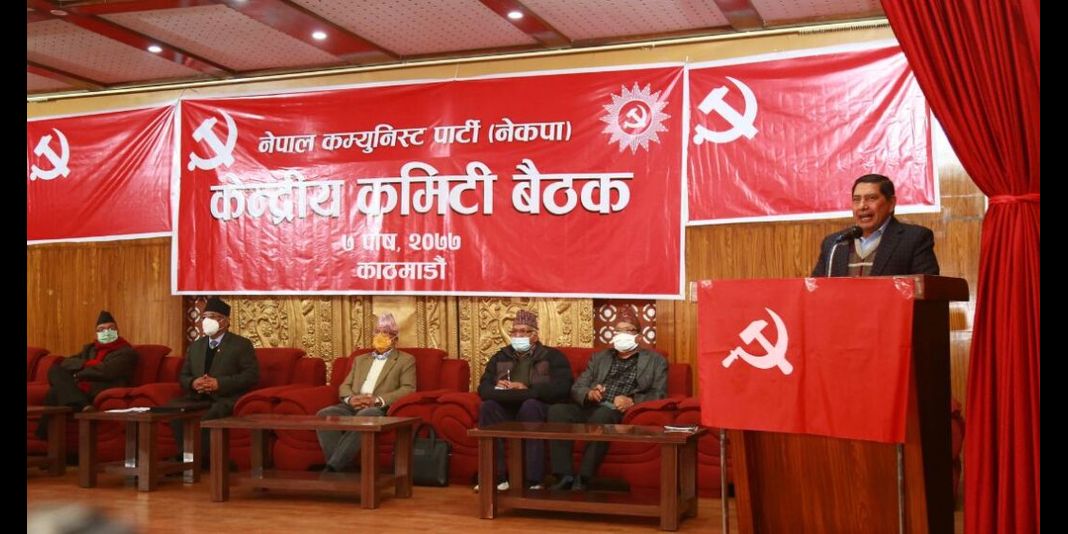
NCP faction names Madhav Kumar Nepal as the party chief to replace KP Oli as Oli expands the party’s central committee by incorporating his loyalists

11 min read
In the inner chambers of the Drafting Committee of the Constituent Assembly, "upper caste" lawmakers chop off and distort previously agreed provisions for Dalits

Features
3 min read
Nepal and Prachanda say they will continue protesting until Parliament gets restored

Features
8 min read
Transgender individuals continue to face abuse at the hands of the Nepal Police
Longreads
70 min read
A thorough look at the origins of Nepal's border claims in the northwest of the country
Interviews
17 min read
Kunwar’s interview with Malla, the businessman-bard, is deeply philosophical even in the midst of playful banter

Perspectives
Popular
Recommended
7 min read
Commissioned by Mahendra, the image of Prithvi Narayan with his index finger raised perfectly encapsulated the Panchayat’s driving refrain of ‘ek raja, ek bhes, ek bhasa, ek desh’.