

News
4 MIN READ

Oli’s conspicuous silence on the recent Dalit lynching is disconcerting, to say the least
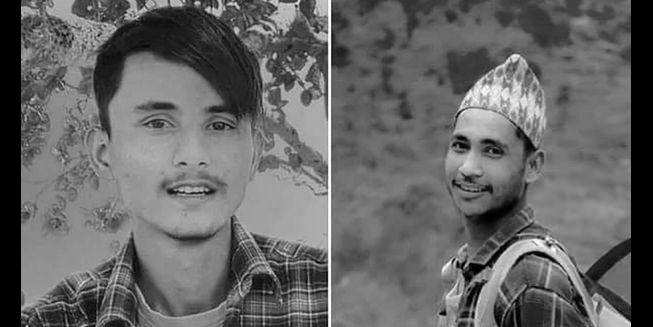
Prime Minister KP Sharma Oli maintained a conspicuous silence on the Rukum lynching while expressing his best wishes on the occasion of the National Day Against Untouchability on Wednesday. On this day in 2011, Nepal outlawed all forms of discrimination based on caste, at least on paper.
Issuing a statement, PM Oli said that the perpetrators of heinous incidents will be brought to justice, without mentioning the recent killings of Dalit men in Rukum as well as a Dalit girl in Rupendehi.
“I urge all individuals, families, societies and concerned bodies to be sensitive towards the protection of human rights of the victims of caste discrimination and to ending violence against them,” PM Oli said, while citing the need for structural changes in eliminating discrimnation based on caste. He, however, did not make any reference to the premeditated killing of six men from the hands of high caste villagers in west Rukum on May 23.
PM Oli’s awkward silence carries a deep significance, especially as a number of senior government officials, including his attorney general (AG), have been blaming the media for exaggerating the facts and spreading rumours about the incident. Addressing a parliamentary committee on Tuesday, AG Agni Kharel said, without going into details, that the investigations do not substantiate several reports that have come out in the media.
“I have been following social media, online news and other reports. I don't know whether the concerned people would object to these reports. The investigations have not shown some things highlighted by the media, especially the kind of things that are related to people’s personal lives,” Kharel told a parliamentary committee. He added that he was committed to preventing any kind of influence intended to weaken the case.
While leaders of the ruling party said that Kharel may have referred to intricacies of relations between Nawaraj BK and his girlfriend, many others have seen it as an effort to whitewash what is essentially a crime against humanity.
Kharel’s remarks come amid reported attempts from leaders of the ruling parties to save the perpetrators and stop local journalists belonging to big media houses to cover the case. On Tuesday, Home Minister Ram Bahadur Thapa told the Parliamentary Committee on Law, Justice and Human Rights that the law alone was insufficient to eliminate such caste-based discrimination. Even the United States of America, the most powerful, prosperous, civilised and democractic country, has not been able to eliminate such discrimination, Thapa said.
Police have recovered all six dead bodies since the time they were thrown or forced to jump into a river to escape the attack after scores of villagers in Soti of western Rukum attacked 19 youths, mainly Dalits, on May 23. Another 13 men were injured during the attack.
On the same day, a 13-year-old Dalit girl—forcibly married to her alleged rapist from a dominant caste—was found hanging from a tree in Rupandehi.
There are two narratives on what led to the lynching. The victims claim that Nawaraj BK, one of the deceased, and 18 others from Jajarkot had gone to the village to escort his longtime girlfriend after getting a message from her. The alleged perpetrators, however, have claimed that Nawaraj and his friends had tried to abduct the girl.
Whatever the truth, the villagers then mercilessly beat the boys and threw many of them into the Bheri river. Some of the boys jumped into the river themselves.
“The mob kept hurling stones at the men even in the water,” inspector Hari Bahadur Oli, a local police officer privy to the investigation, told the Record. He said that the girl had asked Nawaraj to come with his friends.
The lynching has triggered a global outcry, with calls for fair and impartial investigation. The UN High Commissioner for Human Rights Michelle Bachelet expressed shock on Friday at the killing of the six men last week as well as several other incidents of caste-based discrimination and violence that have taken place during the Covid19 pandemic.
“It is distressing that caste-based prejudices remain deeply entrenched in our world in the 21st century, and I am filled with sadness for these two young people who held high hopes of building a life together despite the obstacles presented by their accident of birth,” Bachelet said in a recent statement.
There is equally persistent domestic pressure from Dalit leaders, civil society members and concerned public to punish the perpetrators. On May 27, a coalition of 25 lawmakers submitted a memorandum to the Ministry of Home Affairs to punish the perpetrators and deliver justice for the victims. They had also warned against any attempt to save the perpetrators.
Speaking to the Record, Durga Kumari BK, a Nepal Communist Party lawmaker from Kaski, said that the perpetrators of the Rukum killings should be imprisoned for life.
“Dalit lawmakers as well as other social leaders from across the political spectrum are on the same page. We won't give up until the victims get justice—not just the victims of the Rukum carnage, but also of other incidents ,” said BK.
::::::::

The Record We are an independent digital publication based in Kathmandu, Nepal. Our stories examine politics, the economy, society, and culture. We look into events both current and past, offering depth, analysis, and perspective. Explore our features, explainers, long reads, multimedia stories, and podcasts. There’s something here for everyone.


COVID19
5 min read
The life of a medical professional grappling with the Covid19 crisis in Rolpa

COVID19
7 min read
The second wave is here and unless the government acts soon, Nepal will be in the midst of a public health disaster

Explainers
3 min read
Millions cannot get citizenship certificates, as political parties fail to pass the Citizenship Bill.

Features
5 min read
For many, graduations have been postponed as their finances have dwindled

Interviews
7 min read
Meet Bhawana Shrestha, the Nepali microbiologist who is developing an antibody-based non-hormonal form of contraception that could revolutionize birth control.

Week in Politics
6 min read
The week in politics: what happened, what does it mean, why does it matter?

News
The Wire
4 min read
In secular Nepal, non-Hindus regularly face police harassment

COVID19
Explainers
4 min read
The unreliable RDT kits deployed by the govt have made the Covid crisis worse