

Features
5 MIN READ

From the CJ on down, Nepal’s top-rung judges have amassed a track record of questionable verdicts
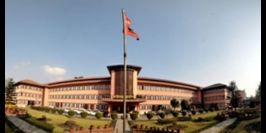
In recent times, the Supreme Court’s judgements have routinely come under controversy. Legal professionals have pointed out the two main factors responsible for the court’s becoming tainted: one, the public have started openly voicing their concerns about the court’s verdicts; and two, the court’s faulty judgements themselves.
Even the judgements handed out by the apex court’s chief himself has caused public outcry. On June 29, Chief Justice Cholendra Shumsher JBR’s bench commuted the sentence of Ranjan Koirala, who was serving a life sentence. A former Deputy Inspector General of the Armed Police Force, Koirala had been arrested several years ago from a crime scene and handed over to the police. But the bench allowed his early release, arguing that his two ‘underage’ sons required his care--even though both of them are already adults.
On July 23, Koirala was released from jail. Immediately, Kathmandu’s youths staged protests against the verdict and demanded that the chief justice be impeached for his faulty judgement. And just hours after the murder convict was released, the Office of the Attorney General filed a petition seeking a review of the judgement. On July 27, a full bench comprising justices Bam Kumar Shrestha, Prakash Kumar Dhungana, and Kumar Regmi decided that the judgement could be reviewed.
That decision--to allow the review--shows both that the apex court’s judgement was faulty and that the public outcry was warranted. Owing to the Koirala case and a host of similar others, legal professionals have expressed concerns over the potential erosion of the public’s faith in the judiciary. To remedy the problem, suggestions have been offered by all manner of legal experts: the Nepal Bar Association urged the media to exercise restraint in writing news about sub-judice cases, while the Former Judges Forum Nepal, headed by former Chief Justice Kedarnath Upadhyay, issued a statement demanding a hearing, without delay, of the review petition.
But the recent fiascos by the court do not signal the rise of a new phenomenon. In the past, the public did not pay enough attention to such cases--until the media brought them to public notice. And in the past, Justice JBR did deliver several controversial judgments. For instance, in 2015, the then Chief Justice Ram Kumar Prasad Shah and Justice Cholendra Shumsher JBR ordered the Nepal Trust to return 15 ropani of land claimed by former Princess Prerana Rajya Laxmi Singh, daughter of ex-King Gyanendra Shah. In 2017, a full bench of then Chief Justice Sushila Karki and Justices Sapana Pradhan Malla and Deep Kumar Karki reviewed the verdict and said that the land belonged to the government. As a justice in the Special Court, Justice JBR had acquitted politicians Khum Bahadur Khadka, Jay Prakash Gupta, and Govinda Raj Joshi. The cases against these leaders were later filed at the Supreme Court, and all three were found guilty.
But while the spotlight has recently been on CJ JBR, a scrutiny of who comprised the bench in quite a few questionable cases reveals one name in particular. Sharing the bench with CJ JBR in the Koirala case was Justice Tej Bahadur KC.
And just as CJ JBR does, Justice KC too owns a track record of questionable judgements. Justice KC’s judgement on the murder case of Ramhari Shrestha, for one, invited criticism from all quarters. In 2008, Shrestha was abducted and murdered by Gobinda Bahadur Batala, a Brigadier Commander in the now-disbanded Maoist People’s Liberation Army. Shrestha’s body was later found in the Trishuli River. One of the then Maoist commanders, Kali Bahadur Kham, had said that Shrestha was held at the Third Division at Jutpani, where on 10 May, 2008, he succumbed to injuries resulting from beatings. The Maoists themselves had handed over Batala to the police office in Chitwan for his alleged involvement in beating Shrestha to death.
Based on Batala’s statement and other circumstantial evidence, a single bench of Bhoj Raj Adhikari, a judge of the Chitwan District Court, in December 2011 convicted Batala and slapped a three-year sentence on him. The judge, however, refused to slap a life-imprisonment term, defining Batala’s role in the incident as that of a mere eyewitness. Among those accused in the murder case were Maoist combatants Kali Bahadur Kham, Keshav Adhikari, Ganga Ram Thapa, and Arjun Karki, but the court did not punish them. Kham was later made a member of the Maoist party’s central committee.
Batala separately appealed the case at the then Appellate Court Hetauda. A division bench of Justices Til Prasad Shrestha and Binod Sharma, however, upheld the district court’s verdict. But on March 1, a division bench of Justices Tej Bahadur KC and Tanka Bahadur Moktan revoked the verdict of the junior courts and gave a clean chit to Batala, arguing that he was not involved at all in the entire crime.
The apex court’s frequent acquittals of those charged with murder--following verdicts delivered by the same judges--has caused anger within the legal fraternity. Not too long ago, a gathering of more than 50 senior advocates, including Shambhu Thapa, Harihar Dahal, and Tikaram Bhattarai, criticized the recent court verdicts. “Form a committee comprising former justices and senior advocates to study the recent controversial Supreme Court orders and verdicts and prepare a report,” reads the appeal issued to help maintain judicial independence.
The list of controversial judgements made by Justice KC is rather long. On February 6, 2018, Justice KC ordered the Nepal Rastra Bank to unfreeze $21.3 million worth of suspicious foreign direct investments belonging to controversial businessman Ajey Raj Sumargi. The money had been frozen in the bank for years because there were suspicions the funds comprised illicit capital flown into the country from tax haven Cyprus.
“When a water’s source is dirty, it’s pointless to expect clean water at the bottom,” said Gauri Bahadur Karki, former chairman of the Special Court, referring to CJ JBR’s apex court. “Indeed, bench shopping or setting has become the new normal in our judiciary. That’s why the imprisonment of a murder convict like Ranjan was commuted.”
Justice KC was also part of the bench that gave a verdict in favour of Ncell, the private-sector telecom giant. Last year, a full bench comprising Justices KC, Purusottam Bhandari, Dambar Bahadur Shahi, Susmalata Mathema, and Manoj Kumar Karna had scrapped the tax liability determined by the tax authorities. And Ncell ended up paying only NRs 21.10 billion in capital gains (of the Rs 39.06 billion the tax office had assessed)--a whopping NRs 18 billion less than the amount they were supposed to pay. The verdict was widely criticized.
In contrast to the liberal approach he has employed as an apex court justice when judging murder convicts, Justice KC, earlier, used a much more draconian approach regarding cases of social justice. During his tenure at the Surkhet Appellate Court, Justice KC, for example, upheld the district court verdict that had slapped a 12-year imprisonment term on Deepak Kami, a poor Dalit, on cow-slaughtering charges. In that case, the plaintiff had confessed that Kami had in fact not killed any cows and that the complaint against him was false.
Owing to the recent rash of similarly outrageous verdicts, the public sphere is seeing raging debates about how the courts and the machinery of justice need to be cleaned up. The main justice the public is focusing on is CJ JBR. But he has not been acting alone. Justice KC and others too have played their part in tainting the court’s image.
::::::::::::

The Record We are an independent digital publication based in Kathmandu, Nepal. Our stories examine politics, the economy, society, and culture. We look into events both current and past, offering depth, analysis, and perspective. Explore our features, explainers, long reads, multimedia stories, and podcasts. There’s something here for everyone.


Explainers
8 min read
The week in politics: what happened, what does it mean, why does it matter.

Explainers
5 min read
The week in politics: what happened, what does it mean, why does it matter.

Explainers
10 min read
The week in politics: what happened, what does it mean, why does it matter.

Features
The Wire
3 min read
On the way to the main square of the hill town of Putalibazaar in Syangja district, you’ll find a small retail store...

COVID19
2 min read
A daily summary of Covid19 related developments that matter

COVID19
Features
4 min read
The government has relaxed all safety measures and is preoccupied with a political crisis, even as the UK variant of the coronavirus is believed to be much more infectious

Features
5 min read
For many, graduations have been postponed as their finances have dwindled

Podcast
16 min read
Marty Logan speaks with Nepalis about building a better country.