

News
2 MIN READ

Villages routinely get swept away in Nepal’s most landslide-prone district because locals, fed up with government apathy, are building settlements in risky locations

The locals of Bhirkharka and Nagpuje, in Baharabise Municipality, had never imagined that landslides would ravage their settlements as the area was considered much safer than the dozens of riskier settlements in Sindhupalchok District. They were also sure they were on safe ground because local authorities had not categorized their settlements as landslide-prone areas.
Thus landslides probably never crossed their mind as the villagers turned in for the night on Saturday evening. But some of those villagers never woke up the next morning, and some are still buried under debris. And most of their neighbours woke up in the early hours of Sunday morning to loud crashing noises generated by the series of landslides that wiped out most homes in the villages.
“Everything had been washed away when we woke up,” said Bir Bahadur Thapa, a local leader.
The landslides, which resulted from the heavy downpour created by a cloudburst, first swept away the villagers’ rice fields before sweeping away large parts of Nagpuje and Bhirkharka villages, said Anil Pokhrel, Executive Chief of National Disaster Risk Reduction & Management Authority.
According to locals, the landslides occurred around 4 am. Those who remain buried were in deep sleep when their houses were swept away. “The situation there is really terrible. And it’s difficult to retrieve dead bodies because they are buried under piles of debris,” said Pokhrel.
From early in the morning on Sunday, rescuers from security agencies and locals have been conducting rescue and relief operations. By the evening, they had retrieved the bodies of 11 locals, but at least 20 people still remain buried under the rubble.
Apart from the loss of lives and property, 38 people from the landslide-hit villages and 250 households from neighbouring villages are now at risk of further landslides. “Providing immediate relief to the landslide-affected villagers and the locals of neighbouring villages now remains a major challenge,” said Pokhrel.
According to geologists, Sindhupalchok has turned into one of Nepal’s most landslide-prone areas of late, especially in the period after 2015’s devastating earthquakes. Although landslide prevalence was high in the district even before the earthquakes, more and more devastating landslides have been occurring recently there now.
About a month ago, three dozen people were buried alive in the village of Lidi. A total of 17 instances of major landslides have occurred in the district this year, according to the National Emergency Operation Center.
In the aftermath of 2015’s earthquakes, seismic experts had recommended that many settlements in Sindhupalchok be relocated. But frustrated by bureaucratic red tape and lack of concrete relocation and livelihood plans, locals started to rebuild houses even in risky areas where the land had been destabilized by the quakes.
Today, because most quake-damaged houses in Sindhupalchok have been rebuilt, politicians representing the district have started to lobby for the creation of integrated settlements. “We need a comprehensive study about earthquake prevalence and plans for building safer buildings,” said Agni Prasad Sapkota, who reached the landslide-hit areas after the latest disaster. Sindupalchok is Sapkota’s constituency. “I will raise this issue with the prime minister as soon as I reach Kathmandu.”
::::::::

The Record We are an independent digital publication based in Kathmandu, Nepal. Our stories examine politics, the economy, society, and culture. We look into events both current and past, offering depth, analysis, and perspective. Explore our features, explainers, long reads, multimedia stories, and podcasts. There’s something here for everyone.


Perspectives
9 min read
Russia’s economic and political power as an energy exporter emboldens its invasion of Ukraine. There is a lesson here for emerging economies like Nepal.

Perspectives
9 min read
Can the face of the Citizen’s Movement be that of the subaltern collective, one that disrupts the elite history of the nation-state?

COVID19
Features
4 min read
A Chitwan hospital has begun antigen tests, pre-empting the government’s directives

COVID19
News
3 min read
With the government repealing its earlier three-tier designation for Covid hospitals, Covid-19 patients need no longer get shuttled between hospitals if they get sicker
News
3 min read
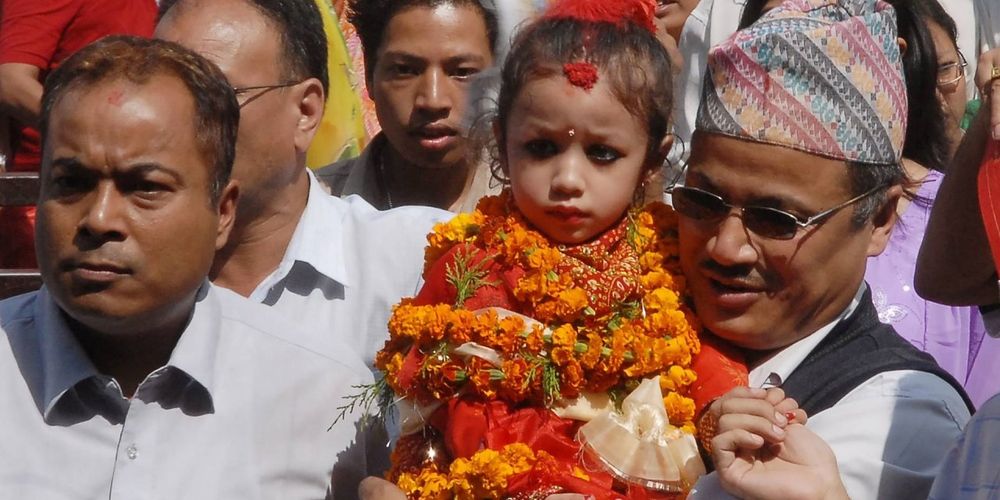
The tradition has drawn criticism from child-rights activists who say the Kumaris are denied a childhood.
News
3 min read
A recently released AI report shows how Qatar is still mistreating migrant workers from countries like Nepal

Opinions
5 min read
Education can only be the great equaliser if everyone is provided quality education.

Perspectives
7 min read
Since coming to power, Prime Minister Oli has attempted numerous times — via ordinances — to bypass the legislation and vest the powers to make laws within himself.