

COVID19
Features
6 MIN READ

The govt has finally heeded expert suggestions to create a hospital dedicated only to treating coronavirus cases
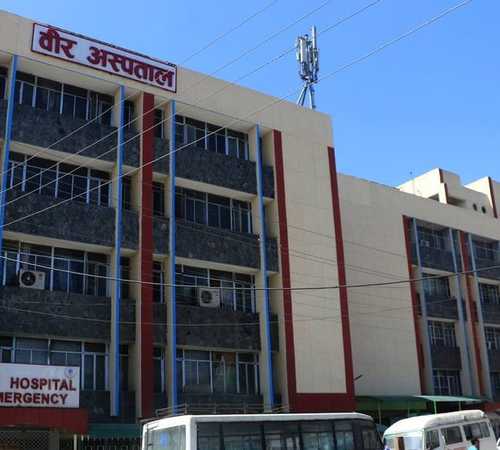
With the continuing surge in Covid case numbers, the Ministry of Health and Population (MoHP) has decided to turn Bir Hospital, the oldest state-run hospital in Kathmandu, into a Covid-19 Special Hospital. That means, the 458-bed hospital will now admit only Covid patients.
The move represents a turnaround in the government’s Covid policy. Even as experts had been pushing for the creation of a separate hospital for Covid treatment, the government had kept insisting that all hospitals must deliver all services to all kinds of patients. Earlier, the government seemed to be dismissive of the idea of designating hospitals exclusively for Covid patients. In fact, a Cabinet meeting on August 23 had even decided to remove the categories for Covid-designated hospitals, making it mandatory for all hospitals to treat Covid patients at all stages of the disease. The ministerial meeting had also instructed hospitals to set up a separate ward for treating Covid patients. The government had also instructed private hospitals to set aside 20 percent of their beds for Covid patients. But private hospitals did not comply with the instructions, saying that doing so would put the life of general patients at risk.
Experts had been insisting that a separate hospital for Covid patients would be cost effective and efficient in many ways. For starters, dedicated Covid hospitals do not have to set up separate Covid-only facilities, such as seperate walking passages, entrance and exit doors, toilets, pharmacies, and so on. Further, doctors who have been assigned to deal with only Covid patients do not need to keep changing in and out of uniforms, and they don’t have to worry about transmitting the disease to their general patients.
The decision, on Sunday, to turn Bir Hospital into a Covid-19 Special Hospital was made during a meeting of top health officials. They were meeting to come up with measures for expanding critical care facilities as part of the contingency plan to accommodate the growing number of corona patients in the Valley. As per the new plan, general services that were being delivered by Bir Hospital will now be delivered by the National Trauma Center, which is housed in a separate building next to the hospital.
Last week, over 70 Bir Hospital staff, including doctors, nurses, lab technicians, and others had tested positive for the virus. The hospital was thus forced to stop all services, except for emergencies.
The hospital’s doctors had been worried for some time that such a situation would transpire-- because the hospital had not segregated their staff to treat Covid and non-Covid patients. “From very early on, we knew the situation might get out of hand. The hospital had not taken the needed precautionary measures. Further, we were not confident that the masks and other gear given to us were of good quality,” said one of the hospital’s doctors, who did not want to be named.
When so many hospital staff got infected and had to be isolated, the decision to turn the hospital into a dedicated Covid hospital was the only logical option. Transforming Bir Hospital in this manner represents the first attempt by the government to implement the suggestions offered by health professionals and experts--suggestions they have made from the early days of the pandemic.
On Sunday, apart from the decision to transform Bir Hospital, the ministry also decided to install 60 more ICU beds in Tribhuvan University Teaching Hospital, Kathmandu, and Dhulikhel Hospital, Kavre. The budget needed for the additional emergency beds was released today itself, with the government citing the urgent need to have life-saving beds in the hospitals, given the growing caseloads in Kathmandu Valley.
On Sunday, 384 new cases of coronavirus were detected in Kathmandu Valley. Of them, 290 were detected in Kathmandu, and 32 each were detected in Bhaktapur and Lalitpur.
Every day, between 300-400 new cases are being detected in Kathmandu Valley, despite the ongoing prohibitory orders. And the Health Ministry’s spokesperson, Dr Jageshwor Gautam, said that 980 new virus cases were reported across the country on Sunday, taking the total number of Covid cases to 46,257. With these growing numbers, the government is coming under pressure to handle the outbreak better.
But Nepal, which has struggled on account of its dismal health infrastructure and shortage of health professionals even during normal days, is scrambling to handle the crisis.
The number of critical corona patients keeps increasing every day. Currently, 174 Covid patients are receiving treatment in ICUs, and 27 are on ventilators. The decision to increase ICU and ventilator numbers, according to spokesperson Gautam, was taken in response to the increased number of critical patients.
And to make up for the shortfall of medical professionals, the ministry has instructed the Department of Health Services to hire student doctors, on a contract basis, and deploy them to tackle Covid-19 cases.
The ministry has also urged the general public not to buy any rumours regarding the coronavirus--especially those that seek to dismiss its impacts--and to adopt all possible measures to stay safe from the disease.
“Trust only the official information disseminated by the Health Ministry and the World Health Organization,” said Dr Gautam.
The ministry has also warned that it will take action against rumour mongers.
::::::

The Record We are an independent digital publication based in Kathmandu, Nepal. Our stories examine politics, the economy, society, and culture. We look into events both current and past, offering depth, analysis, and perspective. Explore our features, explainers, long reads, multimedia stories, and podcasts. There’s something here for everyone.


Photo Essays
4 min read
The coronavirus pandemic brought a faint hope for some that their family members who disappeared during the People’s War might finally return

COVID19
News
4 min read
A daily summary of Covid19 related developments that matter

Podcast
13 min read
Nijgadh is not about environment vs. development, it’s the economics that makes no sense at all.

Explainers
9 min read
The English translation of Baburam Acharya’s Aba Yesto Khahilyai Nahos offers a glimpse into Nepal’s shockingly bloody past

Opinions
7 min read
Dependence on imported chemical fertilisers has made Nepal’s farmers vulnerable on more than one front

Perspectives
6 min read
Federalism appears to be working in exactly the two places—with distinct regional identities—where it was most likely to work.

Features
11 min read
Abortion has been legal in Nepal since 2002 but there could be fallout from any overturning of Roe v Wade in the United States.

Features
12 min read
Kesang Tseten, in documenting these grueling stories, has done his part by successfully bringing the experience of the Nepali migrant worker to our attention, and has thus recorded history in unforgettable images.