

Photo Essays
4 MIN READ

The lockdown has made it exceedingly difficult for Tul Bahadur Baram to get the dialysis treatment he needs

For the last three months, Tul Bahadur Baram, 18, from Taku, Gorkha, has been living with his older sister Anni Baram, 21, near Dallu Pul, Kathmandu. They live in a small rented room that sees barely any light.
The siblings came to Kathmandu almost a year ago after both of Tul Bahadur’s kidneys started to fail. Ever since, Tul Bahadur, a Grade 8 student, has not been attending school. The siblings had to leave their village because dialysis treatment is available in only the major cities in Nepal.
The first signs that there was something wrong with his kidneys emerged when Tul Bahadur was 17. His right ear had started to itch. People with dysfunctional kidneys often report experiencing itchiness. His mother initially thought some insect must have lodged itself inside the ear. For a few days, she poured some oil into his ear, to force the insect out, but there was nothing.
Later, Tul Bahadur started showing other symptoms. For example, the right half of his face started to swell, and the family knew he needed to get diagnosed. One day, it got so bad, he fainted while drinking tea. That’s when the family decided to rush him to Kathmandu.
In Kathmandu, he was admitted to Teaching Hospital, Maharajgunj, where he learned that his kidney was failing, owing to sugar and blood-pressure problems he had developed.
The siblings decided to stay back in Kathmandu because Tul Bahadur would need regular dialysis. For patients who cannot afford the service, the government has a system whereby certain hospitals provide free dialysis services. Tul Bahadur’s designated hospital was Buland Siddhi Hospital, in Gongabu. But once the lockdown was clamped, the hospital was not able to provide free dialysis treatment for him. According to the hospital, they have had problems with routing the Ministry of Health’s funds for their dialysis unit. Tul Bahadur was thus referred to a hospital in Bhaktapur, instead.
For the siblings, Bhaktapur is impossible to get to, especially in this time of the lockdown. So Tul Bahadur has continued to get his dialysis done, on credit, at Buland Siddhi Hospital. He has been told the credit will eventually get waived. But when we met him to do the story, we observed how Tul Bahadur had to make his case for availing of the free service.
For getting by in Kathmandu, the siblings depend on the earnings made by Tul Bahadur’s sister. She works at a Patanjali shop in Khusibu, Naya Bazaar, and earns Rs. 12,000 per month. Rs.3,500 of that goes towards their rent.
Whenever he finds the pressures of his life in the capital getting to him, Tul Bahadur reminisces about his school days, about how he and his friend would go fishing in the Daraudi River. He used to dream of someday becoming a lahure. For now, his family just hopes that he can continue to get his dialysis treatment.

:::::::::


Features
6 min read
The Record introduces a new mini-series where we speak to artists from various fields and ask them about the projects they worked on during the lockdown and the pandemic.

COVID19
Features
3 min read
The coronavirus numbers have gone down only because testing has decreased, but the government would have you believe otherwise

Features
6 min read
Sisdole residents continue to suffer health and environmental problems from the thousand tonnes of garbage that are being dumped in their locale every day.

Features
6 min read
Despite the economy being badly hit since last year, the country’s stock market is seeing exponential growth owing to the market’s digitization and the pandemic, analysts say.
Explainers
4 min read
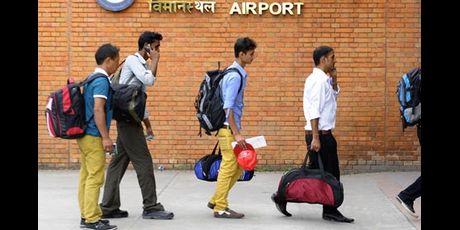
The nation is unprepared for the mass return of migrant workers from destinations across the world

COVID19
News
3 min read
A daily summary of Covid19-related developments that matter

Features
3 min read
Nepal’s migrant laborers are particularly vulnerable to the Covid19 outbreak in the absence of basic healthcare or job security.

News
COVID19
6 min read
With cases surging in the thousands, Nepal has entered the inevitable third Covid-19 wave. Our best defense still remains to mask up, maintain social distancing, and vaccinate.


