

Features
3 MIN READ

Nepal accepts China’s request to jointly announce the new height of the world’s highest peak while risking being dismissed by the international mountain community

Nepal and China announced the new height of Everest concurrently from Kathmandu and Beijing on Tuesday as per an agreement reached between the two countries last year. According to both countries, they’ve reached a consensus and finalised the height of the world’s tallest mountain at 8848.86 metres.
While declaring the new height to the world in a virtual press conference, representatives of the Nepal government stuck to referring to Everest by its Nepali name ‘Mount Sagarmatha’ and the Chinese officials referred to it by ‘Mount Qomolangma.’ The name ‘Everest,’ given to the mountain based on the name of the British surveyor George Everest who first measured its height, was wholly absent in the entire announcement ceremony.
The declaration was timed in a manner to allow the KP Sharma Oli government to showcase its relations with the Chinese government — essentially to India, but also the West. Oli rose to power by riding a wave of nationalism in 2015, when the country was writing a new constitution. The Indian border blockade that followed its promulgation had angered the public and ultimately pushed Nepal into China’s arms. Given a fraught relationship with India, it became easier for a communist-led government to establish and cultivate ties with China. Consequently, Nepal agreed to announce the new height of Everest concurrently, even if Nepali surveyors spent years preparing expeditions, collecting data, and consulting with international geologists and mountaineers to measure its height. China, on the other hand, conducted the survey in just a matter of months.
For the past 65 years, the height of Everest has been accepted at 8848 metres. An Indian survey team had calculated the height using the trigonometric method, which is an old method of measurement. This has been the first survey carried out by Nepal to measure Everest's height by using the latest space science technologies.
The height of Everest has been a political affair rather than a matter of scientific calculation ever since the peak was first conquered in 1953. The US and China started competing with each other to establish the height as a means of shadowboxing. In 1975, a Chinese survey team announced the new height of Everest at 8,848.13 metres. Decades later, in 1999, an American expedition team of surveyors claimed the height of Everest at 8,850 metres. Then again in 2005, China conducted a measurement survey and claimed that Everest was 8844.43 tall.
Nepal has rejected all the recent height announcements, although it never attempted to measure the height of its own treasure until the national expedition survey team did so in May 2019. Just when the survey team had almost finished processing the data and calculating the height, the Nepal government announced that it would join China’s survey to determine the new height of the peak that lies on the border between the two countries.
After 2015’s devastating earthquake, the world’s survey scientists made a clamour about how the height of Everest had been reduced by the effects of the quake. India, which has measured Everest’s height multiple times in the past, wanted to remeasure it. Citing its involvement in the process in the past, the then survey chief of India expressed his desire to measure the height of Everest and a request letter was consequently sent to Nepal’s Department of Survey. But the department rejected the Indian proposal. Instead, it finalised the methodology for measurement by inviting world survey scientists from different parts of the world in Kathmandu and announced the new height of Everest on its own.
In the spring of 2019, Nepal sent a team of surveyors to the top of Everest after completing other essential measurement works. The team also successfully captured data from satellites. China did its best to convince the Nepali surveyors to make the Everest measurement process a joint project. But Nepali bureaucrats continued to refuse Chinese proposals. Failing to woo them, the Chinese delegation made a direct agreement with the highest political leadership.
During Xi Jingping’s 2019 visit to Nepal, the Chinese president highlighted the Everest remeasurement process as a bilateral issue. This halted the work of the Nepali survey scientists for months. In fact, they were dismayed to suddenly be informed about the joint height measurement process from higher authorities. But they had no other option than to execute the decision since it had already been reached at the leadership level without their input. China has increased its presence in Nepal in recent years with its involvement in mega infrastructure projects. President Xi also announced a financial assistance of NRs 56 billion to Nepal during his visit, confirming China’s keen interest in Nepal.
After the agreement was reached, China sent an expedition team in the spring of 2020, a year after Nepal did. Sources privy to the Ministry of Land Reform say the ministry refused to table the proposal at the Cabinet as directed by the PM. Later, the proposal to jointly announce the height was reportedly tabled at the Cabinet by forest and environment minister Shakti Bahadur Basnet.
:::::::

The Record We are an independent digital publication based in Kathmandu, Nepal. Our stories examine politics, the economy, society, and culture. We look into events both current and past, offering depth, analysis, and perspective. Explore our features, explainers, long reads, multimedia stories, and podcasts. There’s something here for everyone.


COVID19
Features
6 min read
Not instituting the right measures from the get go has turned the capital into a coronavirus hotbed

COVID19
Explainers
3 min read
A message circulating on WhatsApp and Facebook Messenger claims that an Indian student from Pondicherry University has found a cure for COVID-19, and the "home remedy" has been approved by World Health Organization (WHO).

COVID19
News
2 min read
Two days after the end of lockdown, the spread of coronavirus has passed a new threshold

COVID19
News
5 min read
The government’s recent stringent measures seem to be a response to more and more public figures getting infected

COVID19
News
3 min read
A daily summary of Covid19-related developments that matter

COVID19
Explainers
6 min read
Many frontline workers are neither being paid the promised risk allowances nor their salaries

Features
Longreads
18 min read
Nepal is pressing ahead with controversial plans to launch commercial farming of wild animals in the country, as major traditional Chinese medicine companies seek to invest.
Features
4 min read
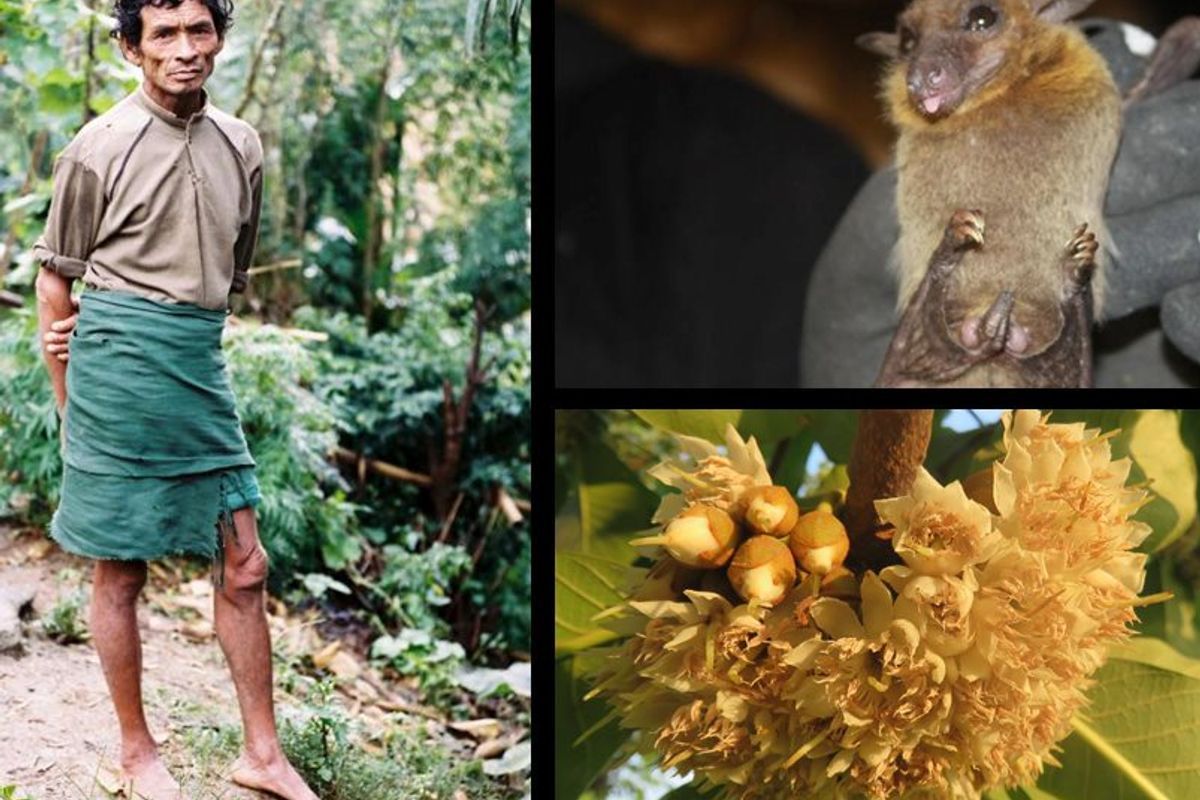
Bats, chiuri trees, and the Chepang community make up a unique ecosystem in the Chure region that is now coming under threat.