

Photo Essays
3 MIN READ

Aging gracefully has little to do with skincare and facelifts; aging with dignity is about honoring your age, your journey, and your being.
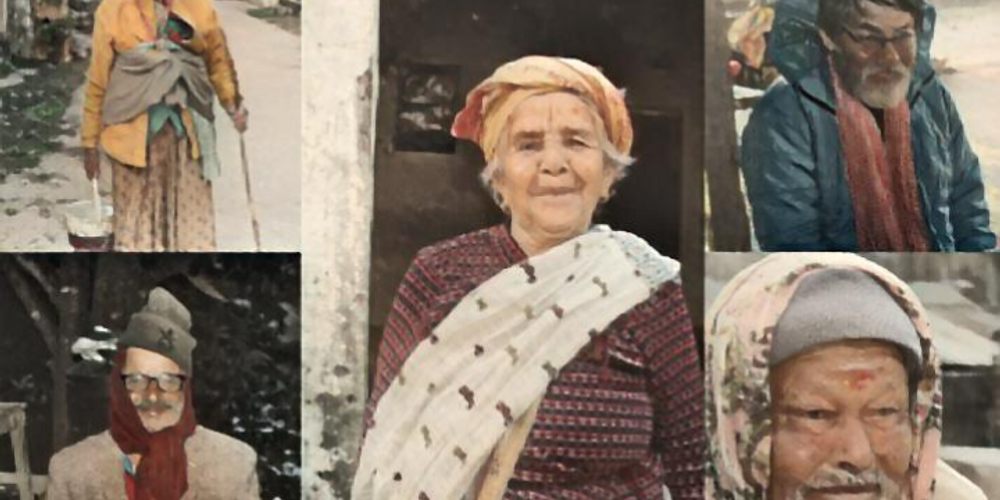
Aging is an inevitable biological truth for all human beings, but the life experiences of senior citizens are difficult to describe, define and operationalize. The social construction of individual aging creates both limitations and opportunities, but all too often, aging is seen as something to hide. Articles, movies, and ads provide advice on how to age gracefully, focusing on makeup, skincare, and obscure beauty tips. The reality, however, is quite the opposite; aging gracefully has very little to do with skincare and facelifts. Aging with dignity is about honoring your age, your journey, and your being.
Sadly, the long-established culture and traditional taboos towards later life are often clouded by the perception that older adults are dependent on their families, communities, or the state. Perhaps it’s time to take a closer look at all these white-haired senior citizens replete with wrinkles, veins, and chronic maladies who continue to live, love, and walk comfortably in their own skins.
I had one such opportunity while conducting research at Devghat in Chitwan. As a religious pilgrimage site, Devghat hosts many senior citizens who come for kalpabas, or meditation there. I was struck by the energy and positivity of the seniors there.
Many senior citizens in Chitwan are growing more and more aware of their own mortality, which leads them to appreciate the time they have left even more. Instead of comparing their circumstances to others and striving for material things, many choose their own paths and make their own decisions.
Sabitri Baral, an 87-year-old woman, described her “wonderfully supportive” children who understood her need for autonomy and self-sufficiency.

Many elderly people remain open to new experiences, despite their age, and they too are able to grow and change. That’s one reason why many seniors don’t see themselves as ‘old’ at all. It isn’t necessarily how well they hide the outward signs of aging, but how they approach the activities in their daily lives that make a difference.
And so, building strong social connections and pursuing socio-religious activities such as bhajankirtan become important components of graceful aging.

With Nepal’s elderly population rising, politicians and policy makers are beginning to recognize the need to create a ‘society for all ages’ where the aged are able to remain healthy and active well into their 80s, 90s, and beyond. But the government of Nepal still needs to work to develop an integrated community alongside long-term care facilities for the geriatric population. This will help them adapt to change, remain physically and socially active, and stay connected to their communities and loved ones.

For many old people, aging brings anxiety and fear. Questions assail them, like how will I take care of myself later in life? What if I lose my spouse? What is going to happen to me when if I am abandoned by my family? What if I lose my memory? These are all valid concerns that need to be dealt with, not just materially but also socially and psychologically. In order to provide opportunities for the elderly to age gracefully, the rest of us need to maintain intergenerational solidarity when it comes to their rights and our obligations all while empowering our seniors.


Kalpana Pun Kalpana Pun holds a Master’s in Social Work, specializing in gerontology, from Tribhuwan University. She has been working in the field of aging, focusing on the psychosocial and economic needs of the geriatric population in Nepal.


Features
7 min read
The government’s decision to resume the export of sand and gravel to reduce the trade deficit will lead to the wholesale exploitation of the environment, say conservationists and lawmakers

Explainers
3 min read
Co-passengers on the flights taken by the latest Covid19 positive patients pose probable risk to public health safety due to the absence of strict quarantine measures imposed by TIA

COVID19
News
4 min read
A daily summary of all Covid19 related developments that matter

Interviews
Longreads
42 min read
In 1996 Padma Ratna Tuladhar spoke about his background, on the need for linguistic inclusion, the prevalent political culture and foreign aid in Nepal

Features
10 min read
Changing the culture of silence surrounding mental illness could save lives

COVID19
News
3 min read
A daily summary of Covid19-related developments that matter

Perspectives
7 min read
The longstanding ‘park-people’ conflict surrounding Chitwan National Park, which includes instances of gross human rights violations against the Tharu community, is a story that is often buried in the garb of conservation.

Features
5 min read
Inside Qatar’s deportation centre, migrants detained under woefully harsh conditions