
Photo Essays
4 MIN READ

New photo collection brings light to women's participation in political struggles

To become public is to be seen and accounted for in history. The journey of Nepali women from within the boundaries of domesticity to the openness of public life is a move from obscurity to memory. A history of women is first and foremost a social history.
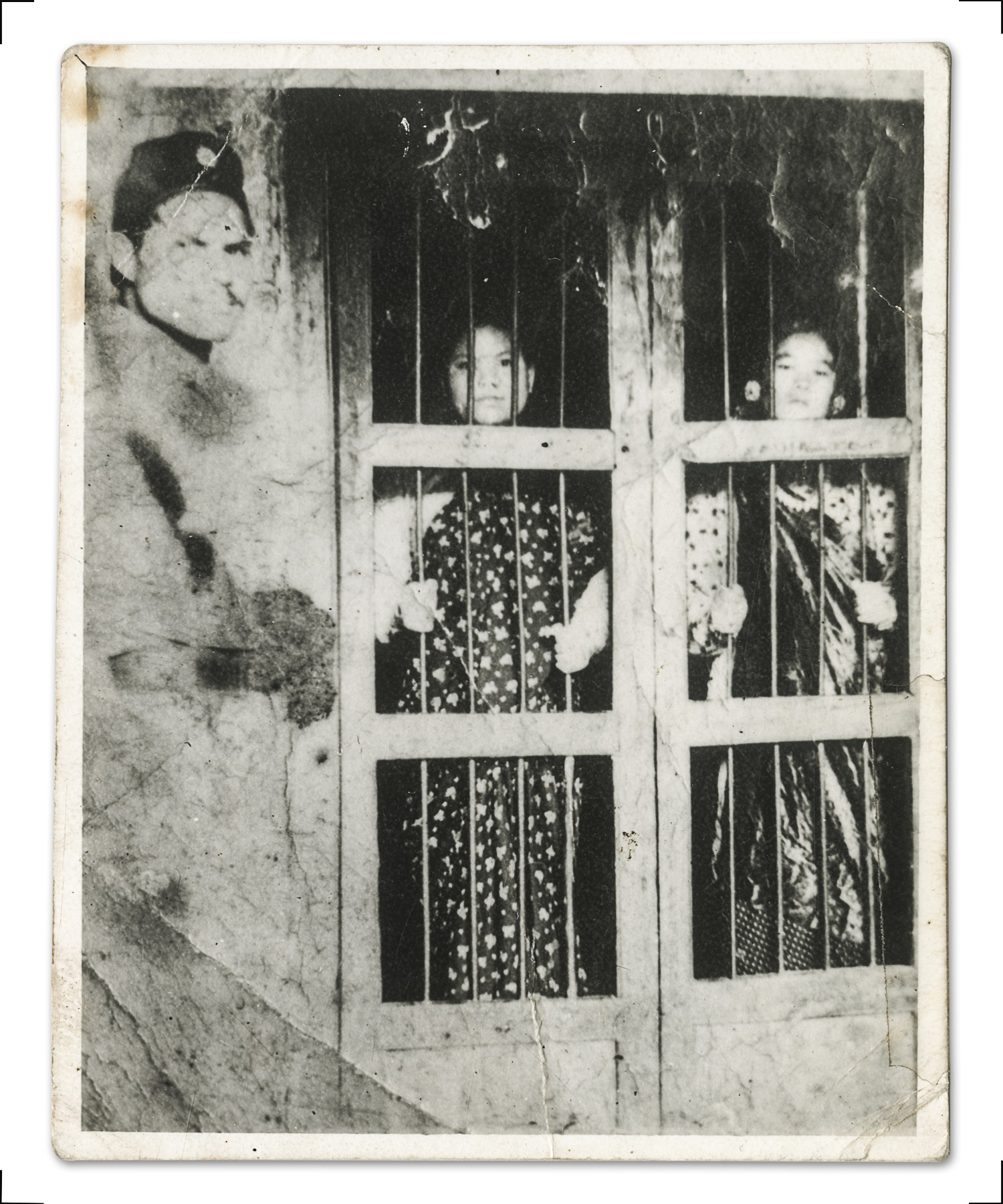
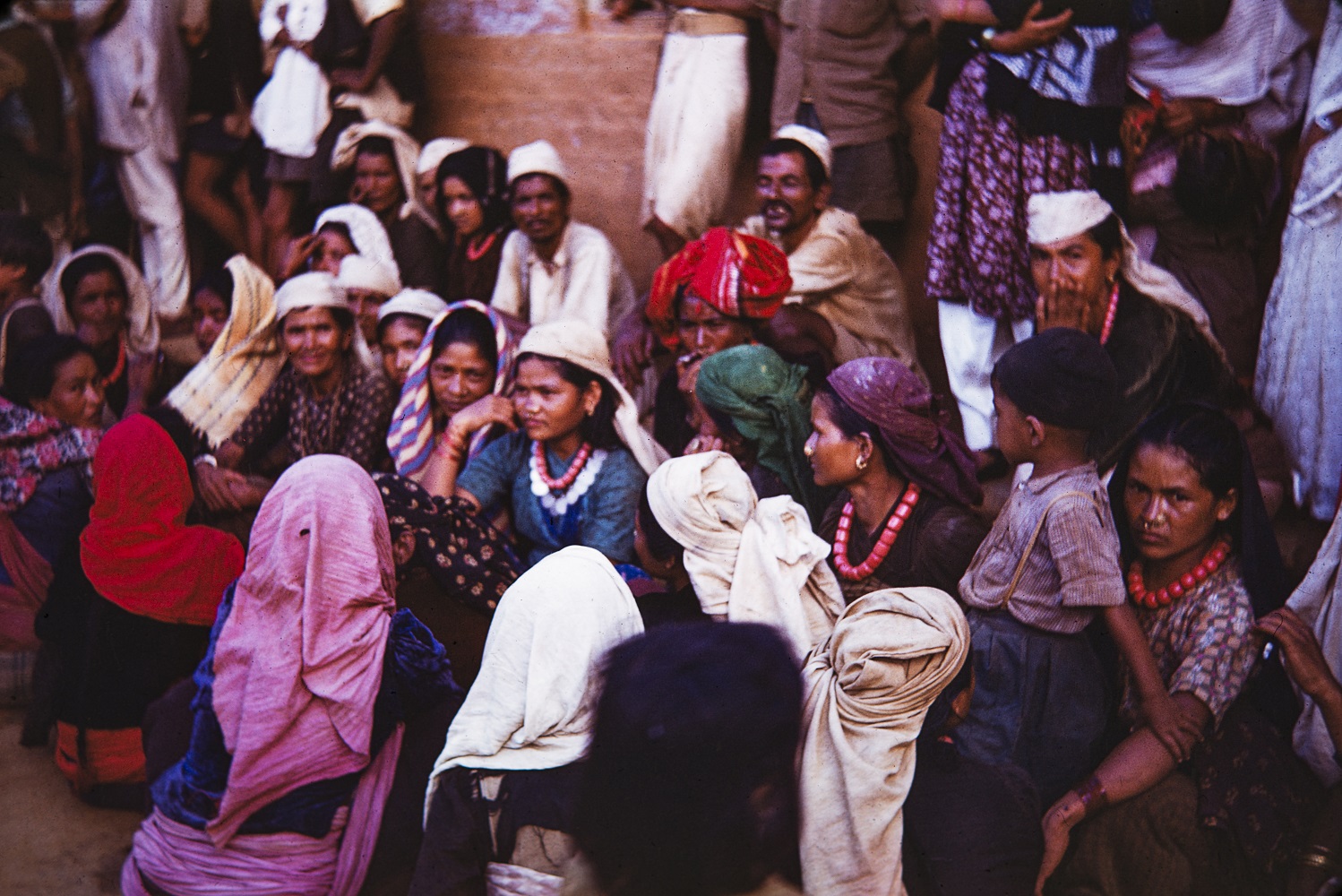
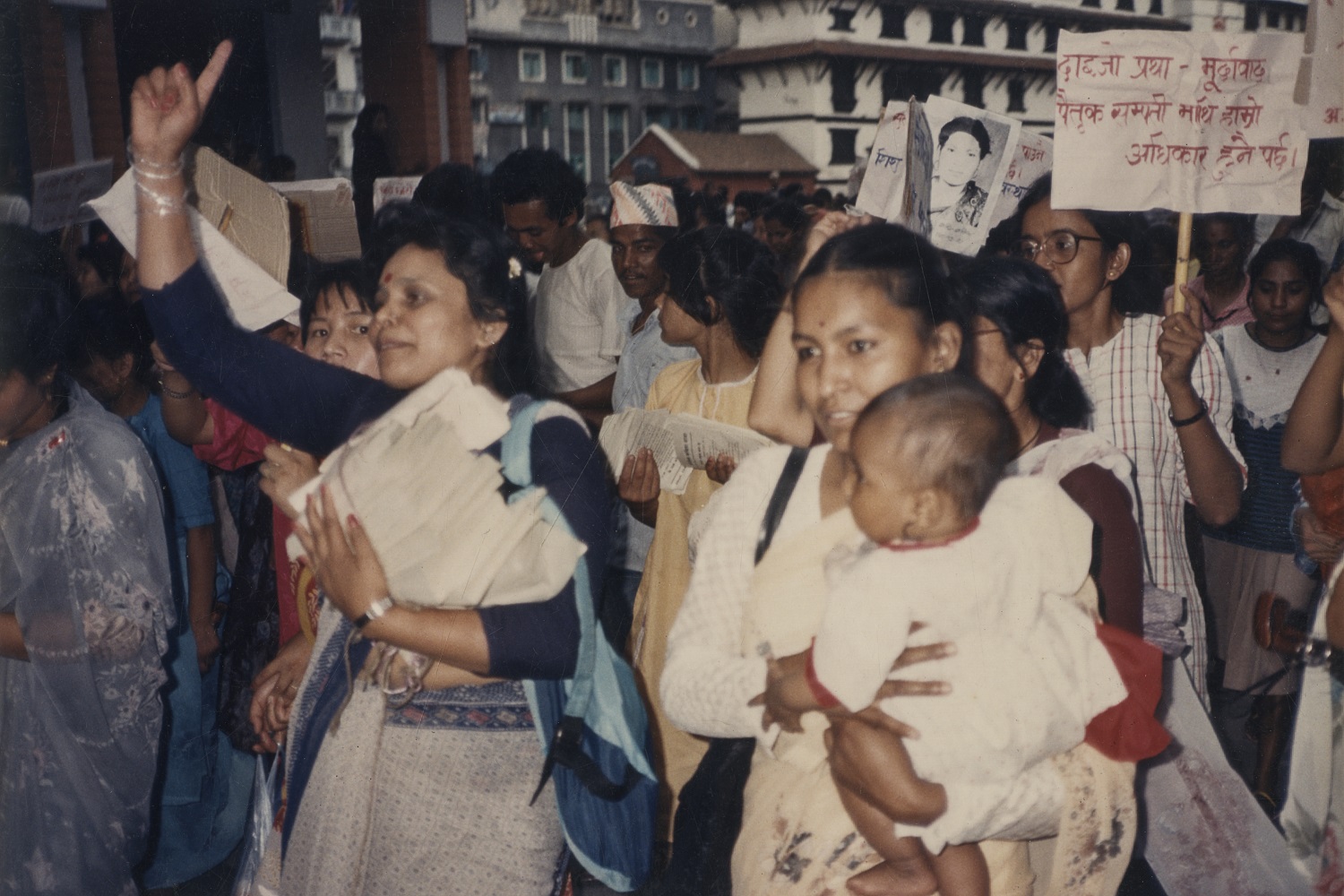
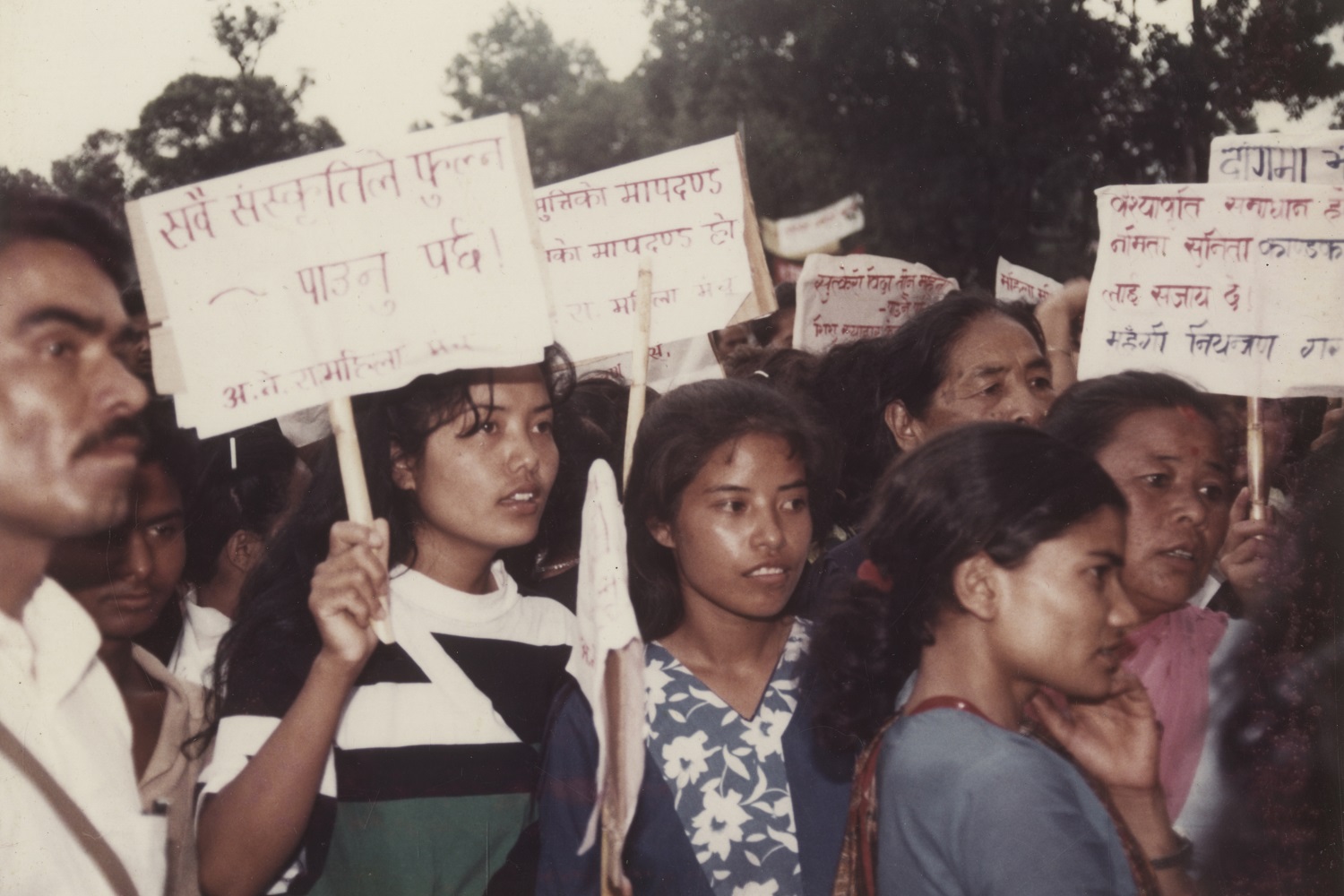
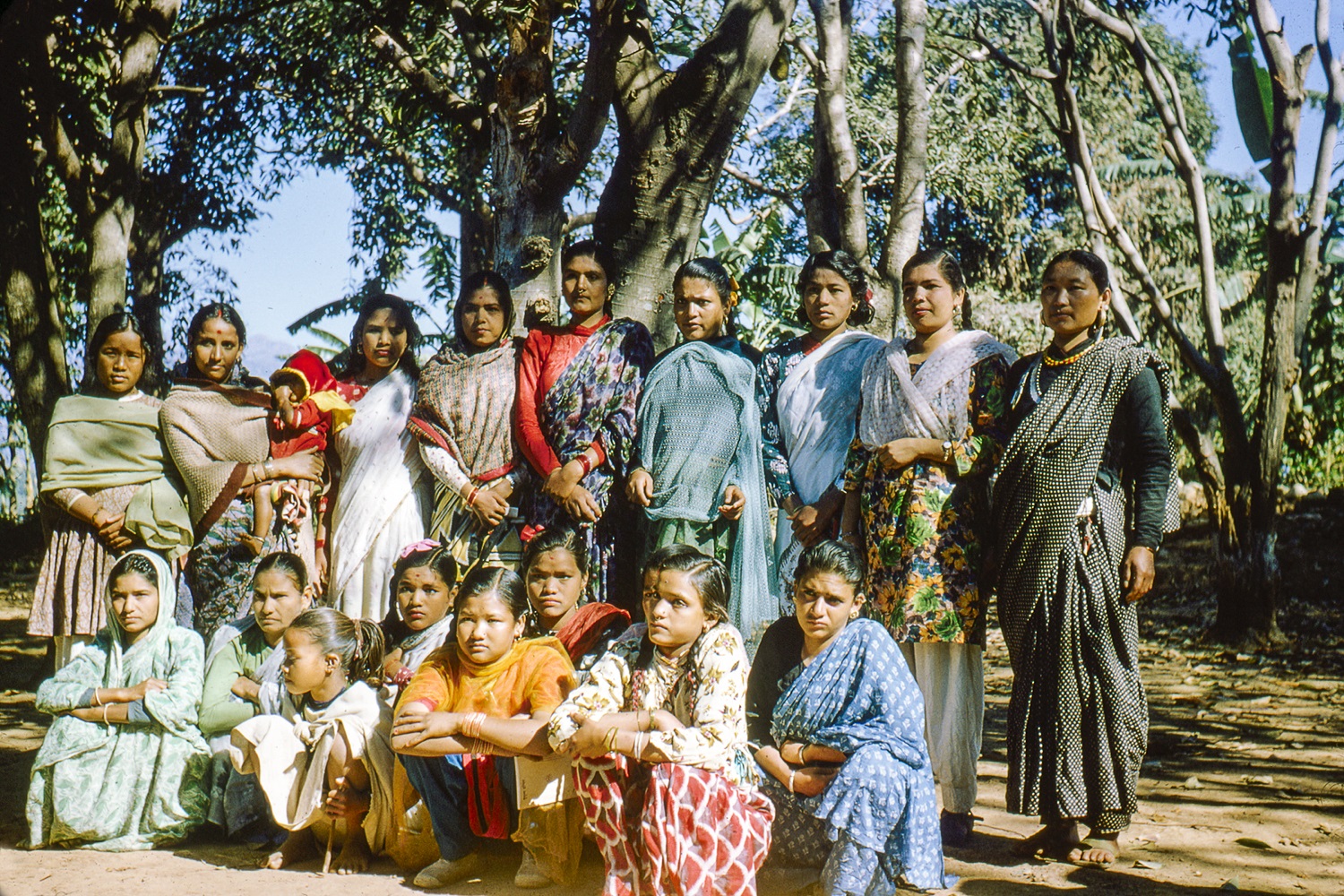
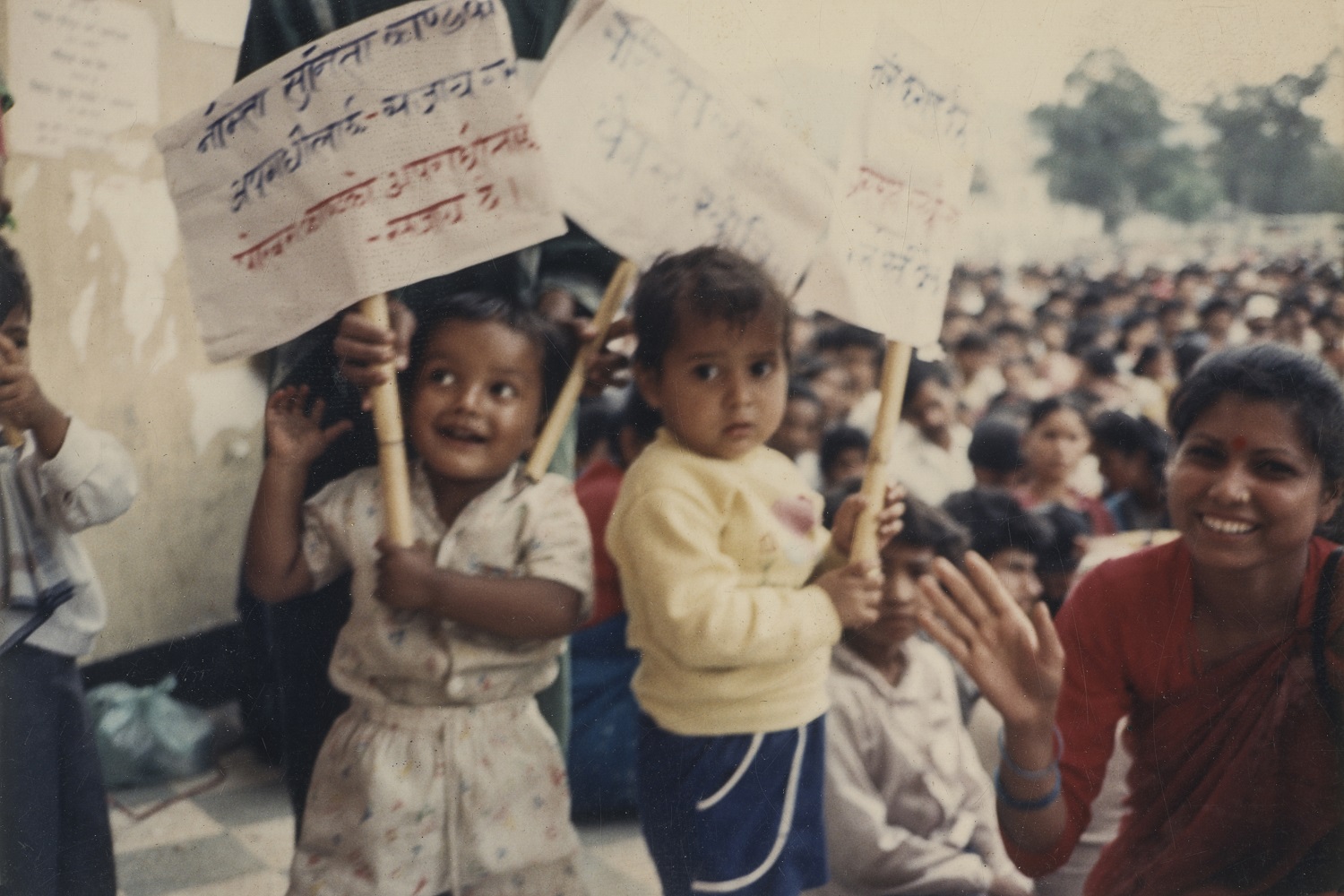
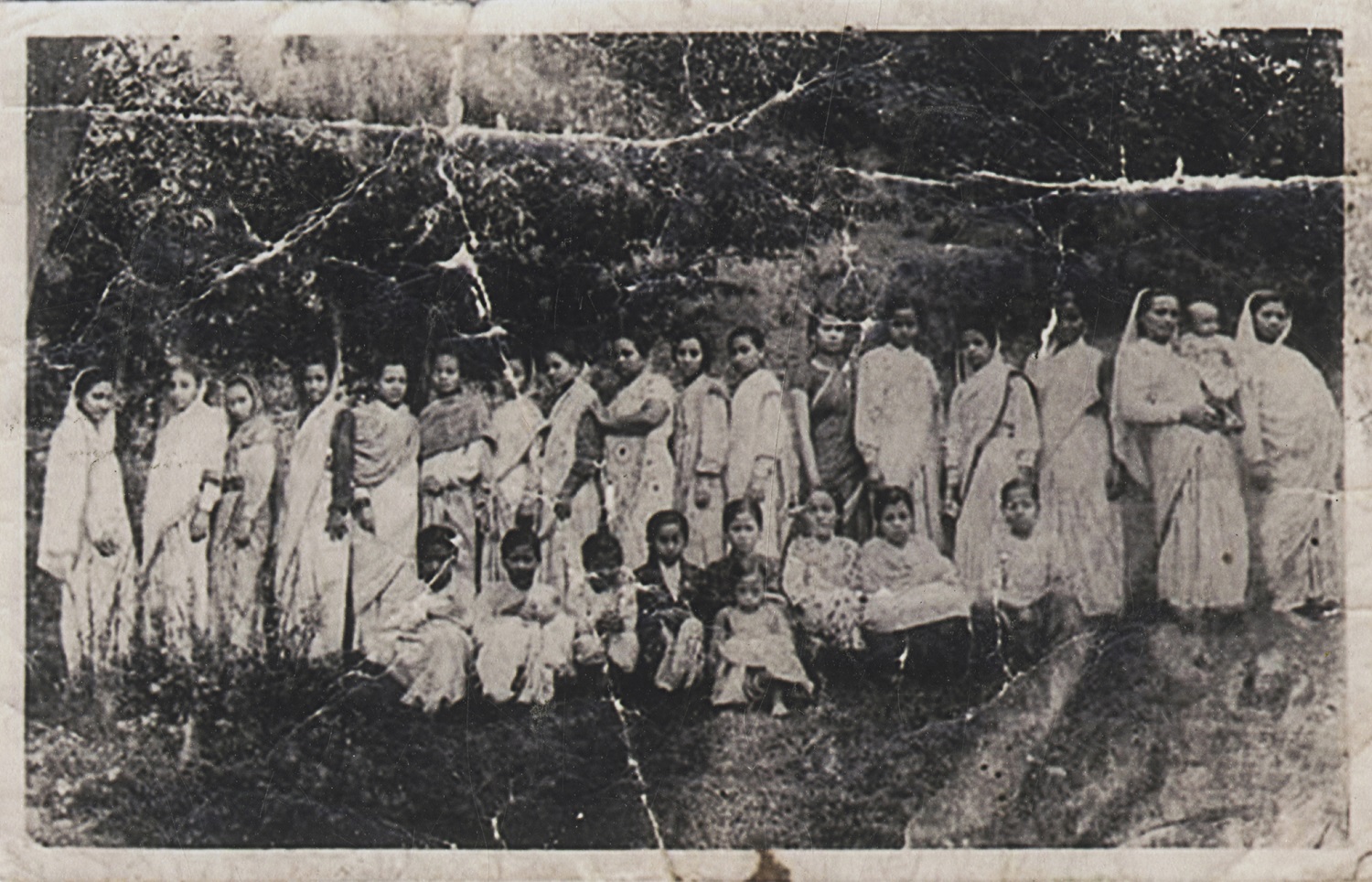
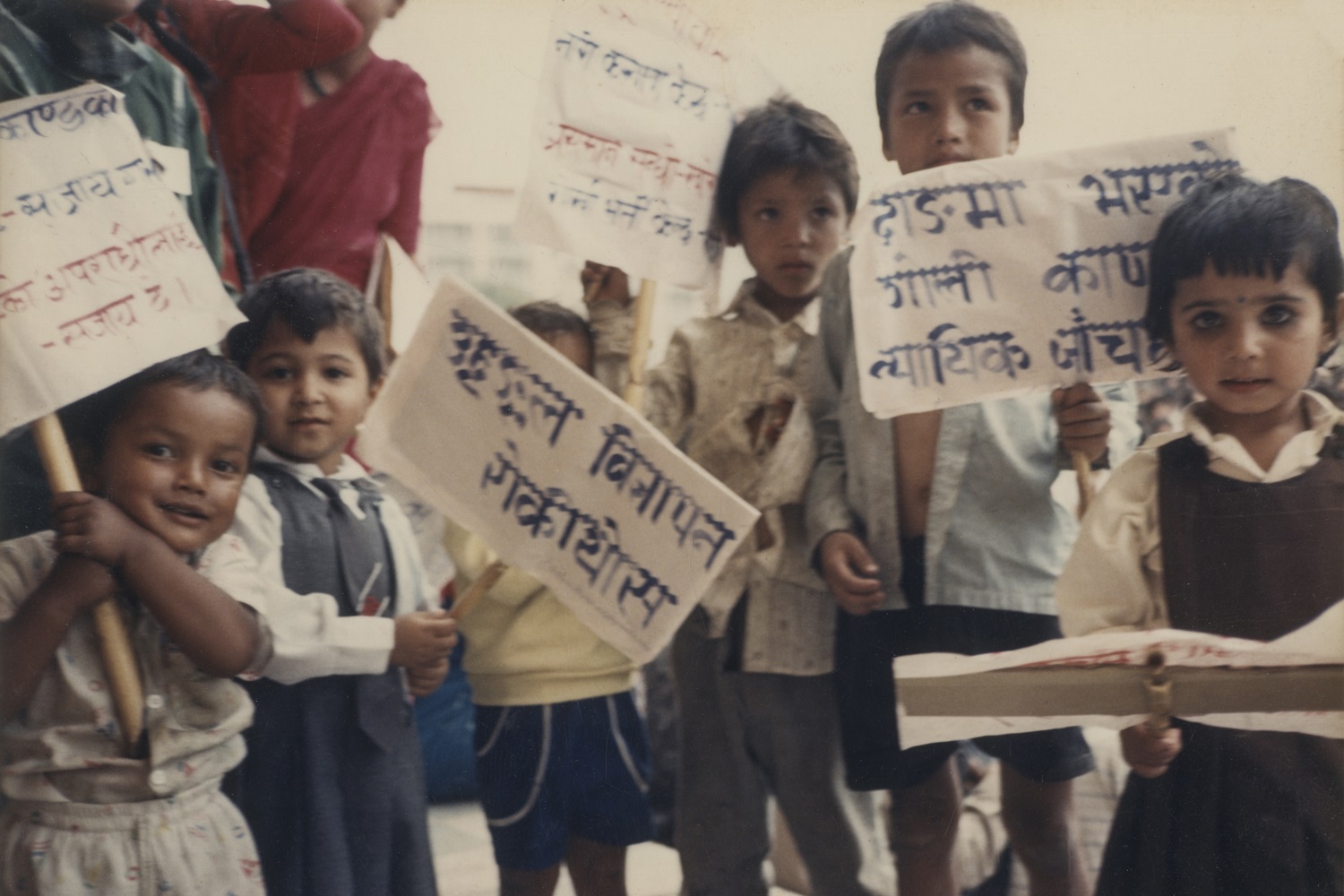
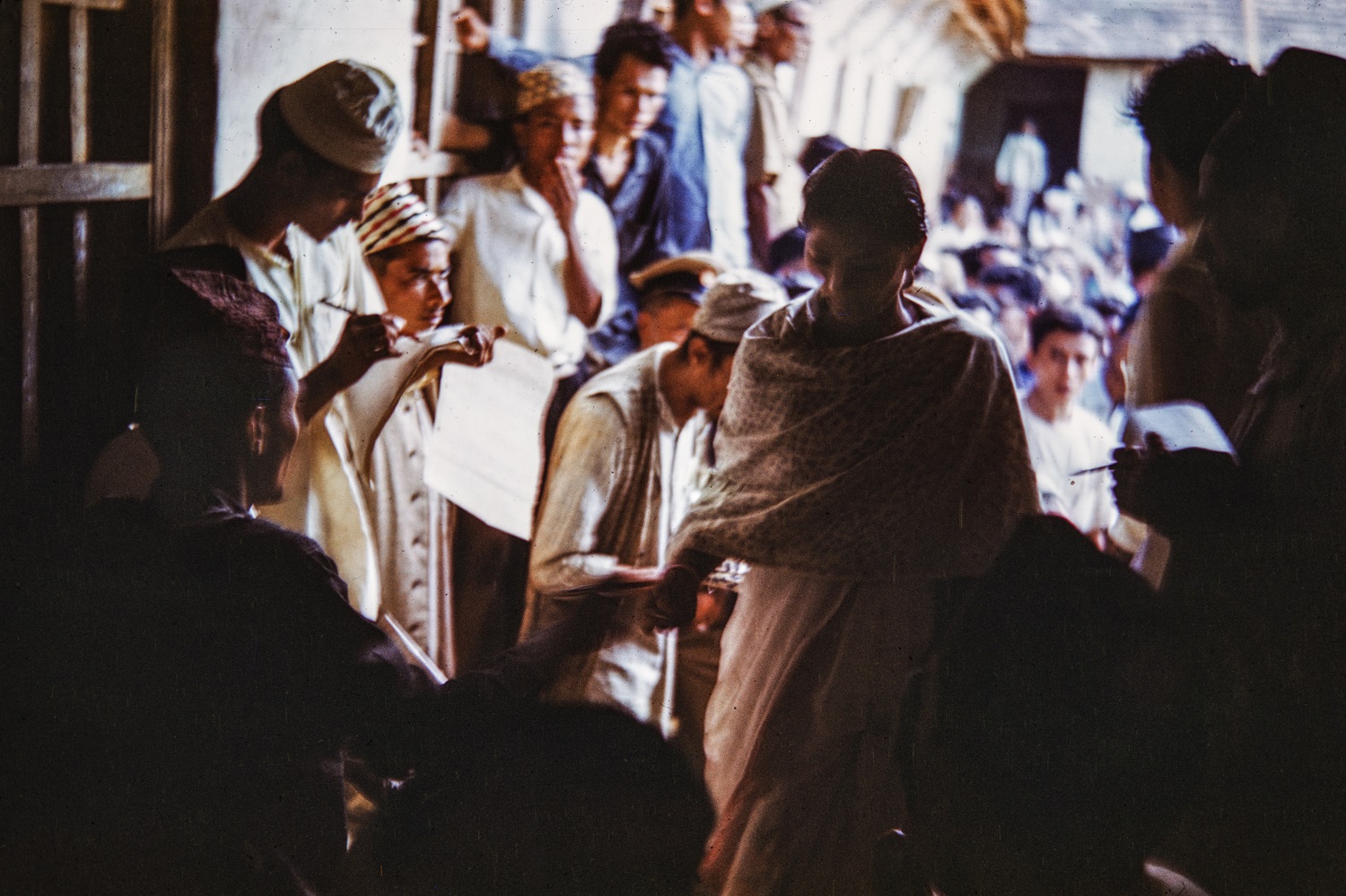
The history of Nepal’s struggle for democracy and progress over the last century is dominated by men and treats women as auxiliary. Women themselves, however, were guided by this new era’s promise of inclusion in a universal community. Looking into this history from women’s perspective brings attention to the ways women made new positions and new subjectivity possible through their entry into popular politics and public life—and also the ways these possibilities made the contours of male-dominated history susceptible to new meanings.
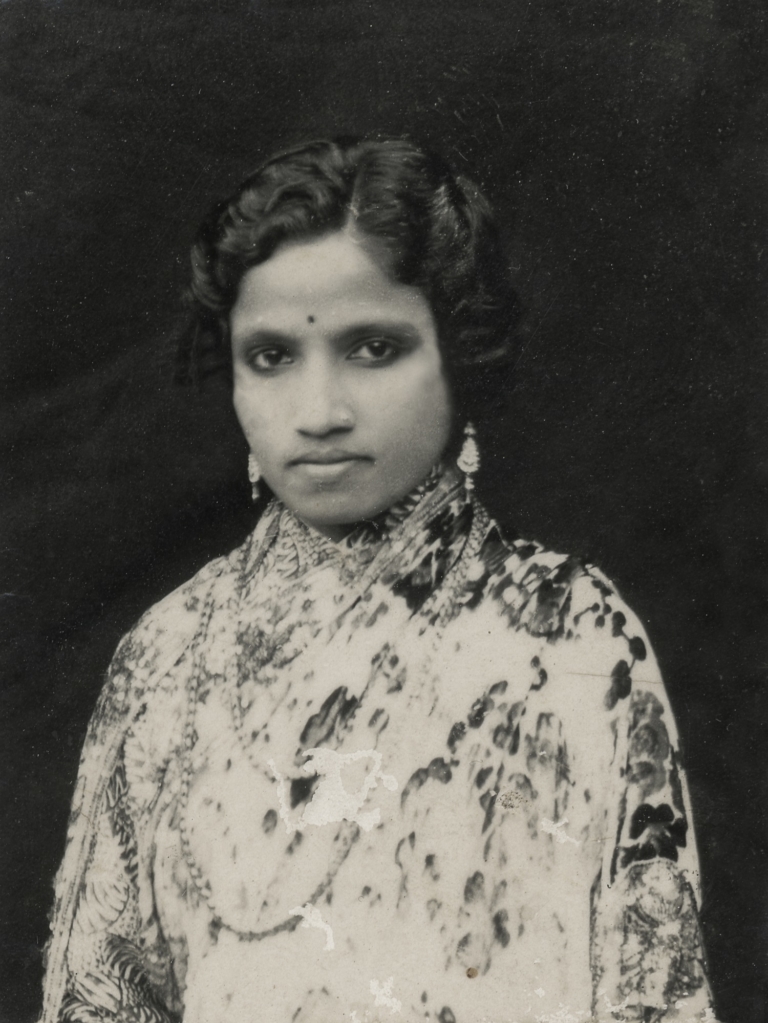
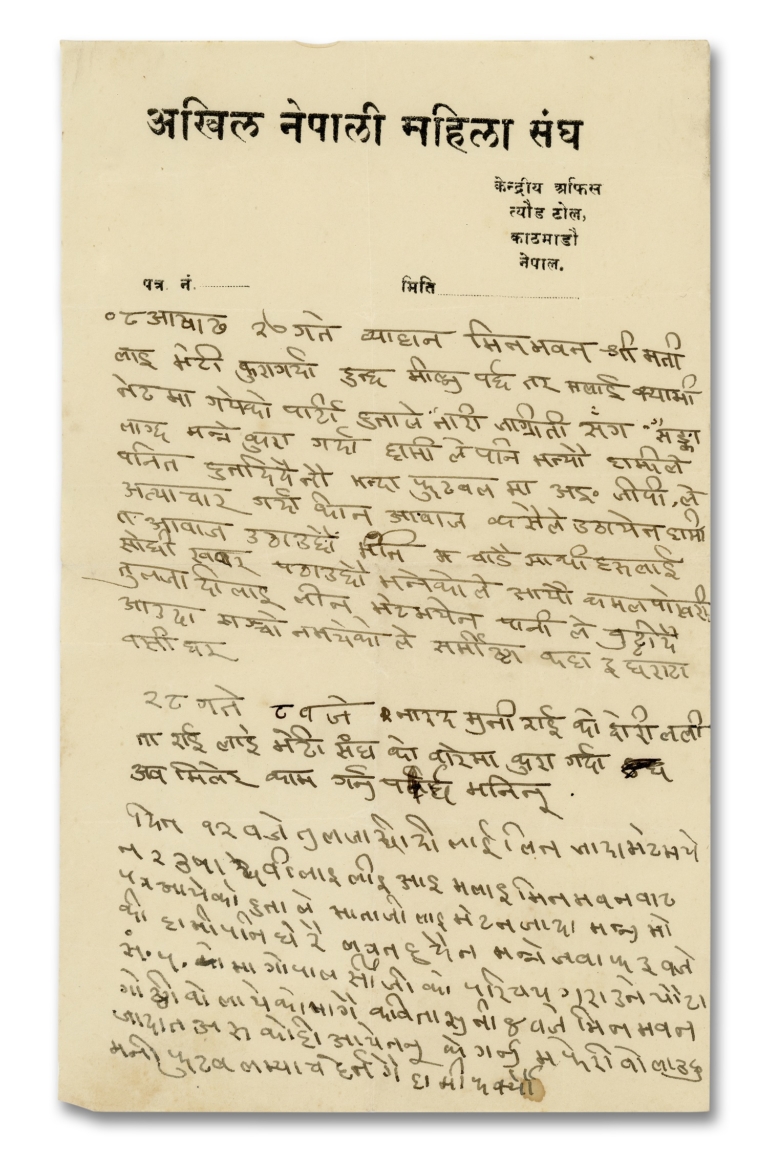
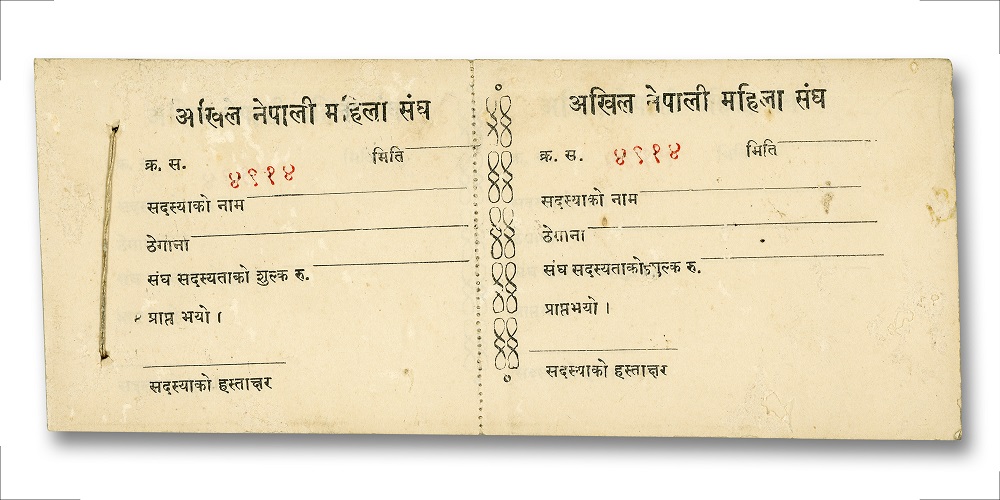
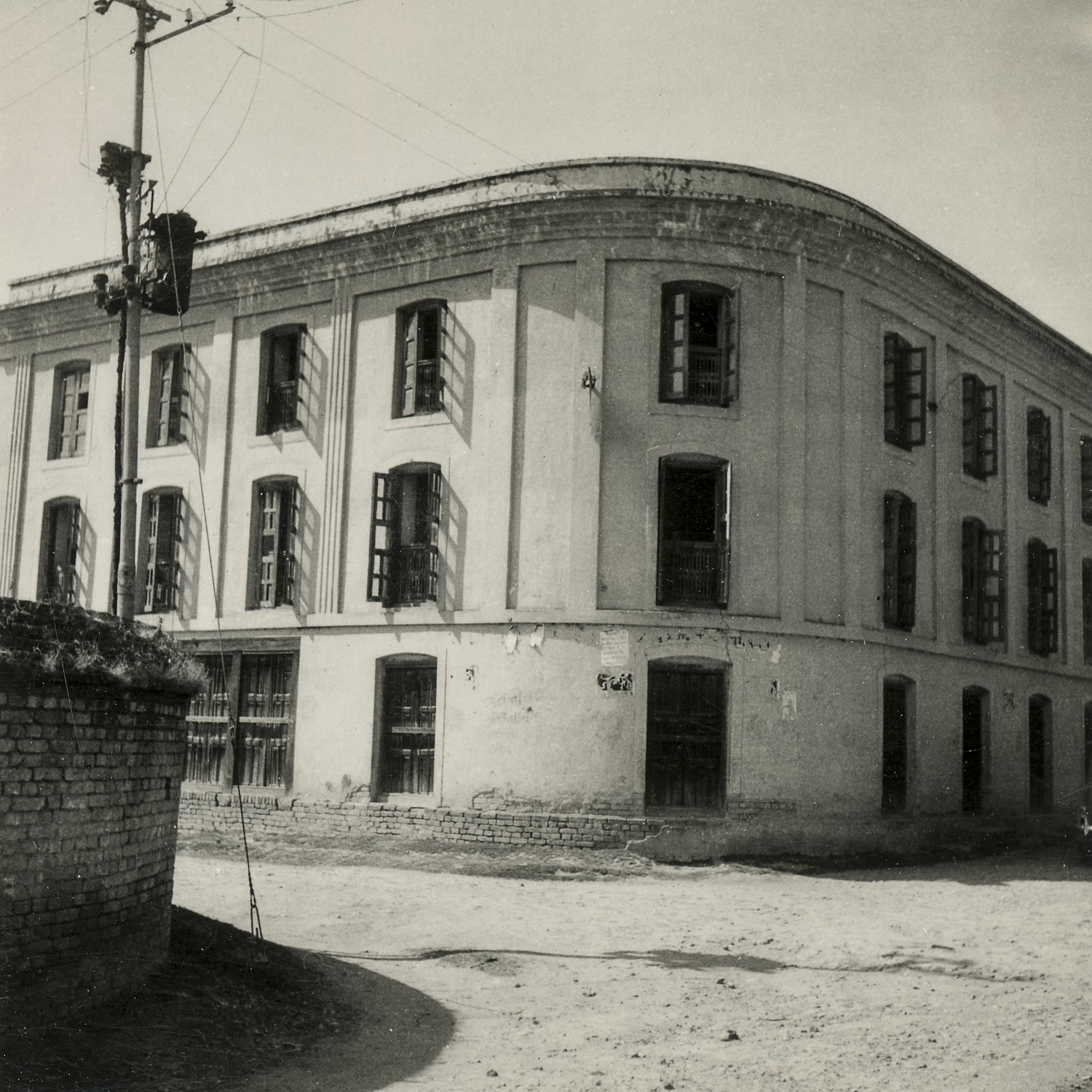
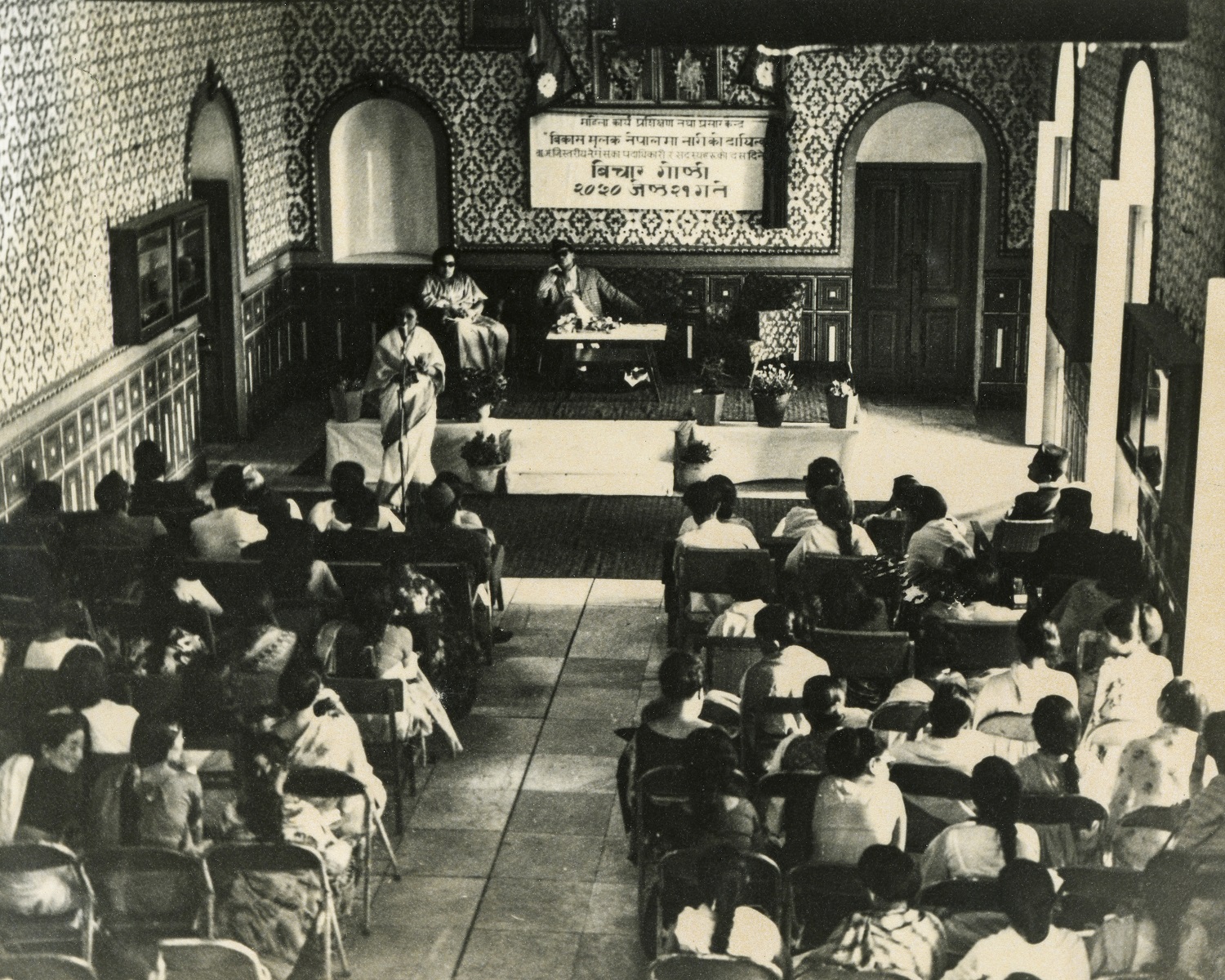
Social worker Punyaprabha Devi Dhungana founded All Nepal Women’s Association in 1951, through which she launched several campaigns to raise awareness about women’s oppression. Also seen is the facade of her organization’s office building in Thamel, donated by Kaiser Shumsher Jang Bahadur Rana. She used to walk to the office from her home in Chabahil and drop in door to door on the way canvassing support for the cause. Badri Binod Dhungana Collection/Nepal Picture Library
Starting with the movement against the Rana oligarchy, we move through the decades seeking to transmit the memory and amplify the visibility of women in Nepal’s political history. The images and the narratives of the past needed to be freed from the grips of economically and culturally dominant groups and presented to disclose—in the true spirit of inclusion and democracy—the diversities, differences, and dissensions of Nepali history.
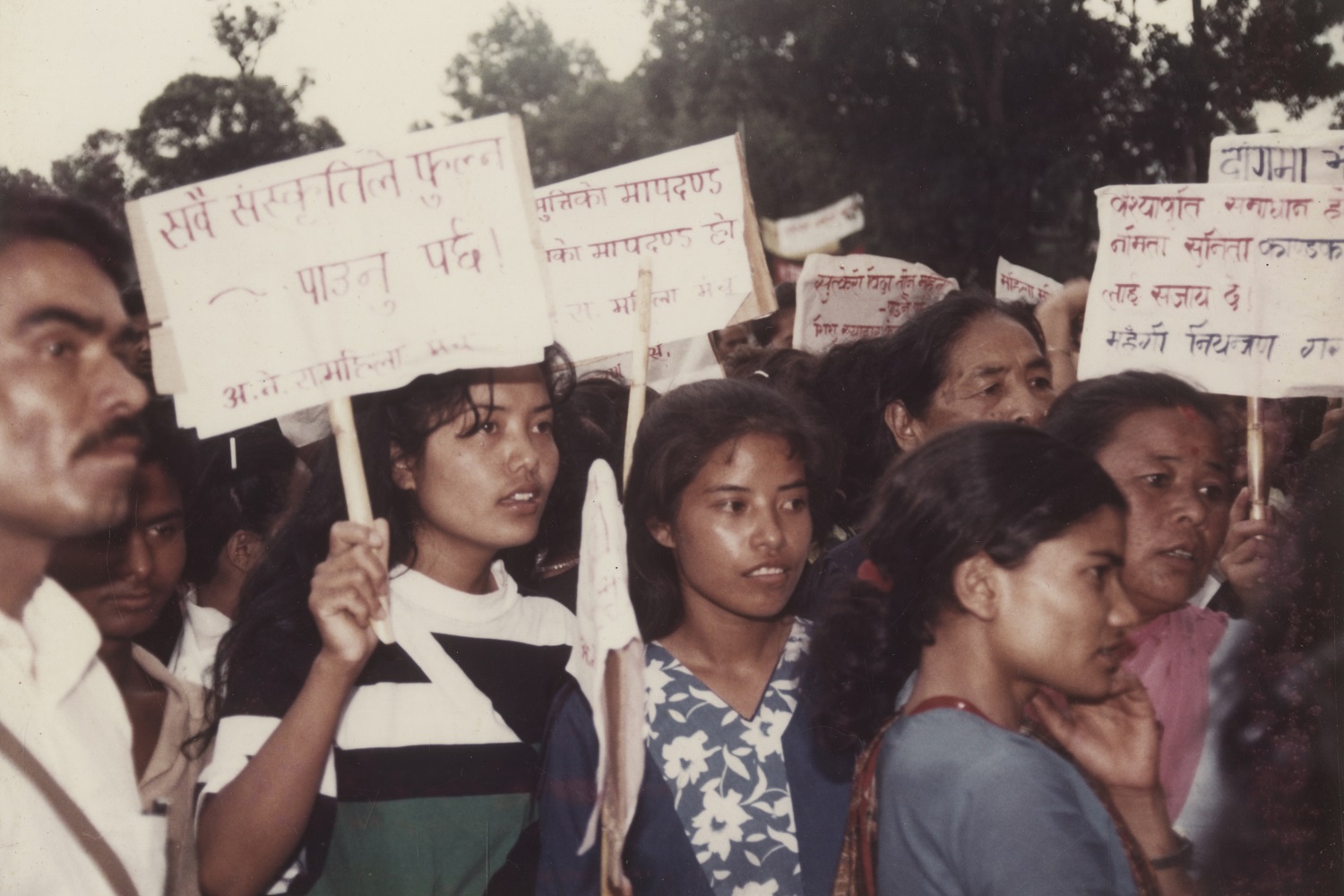
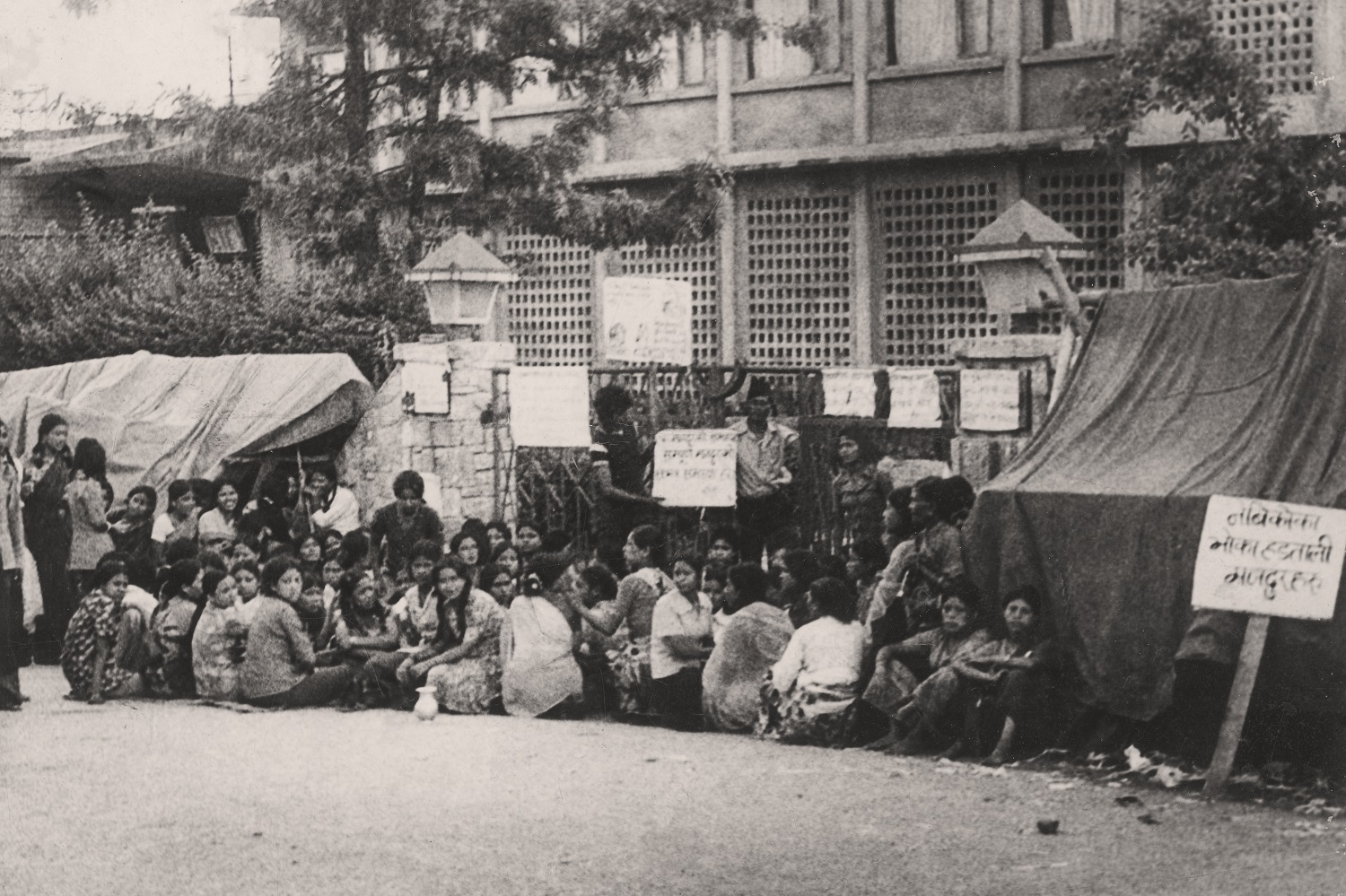
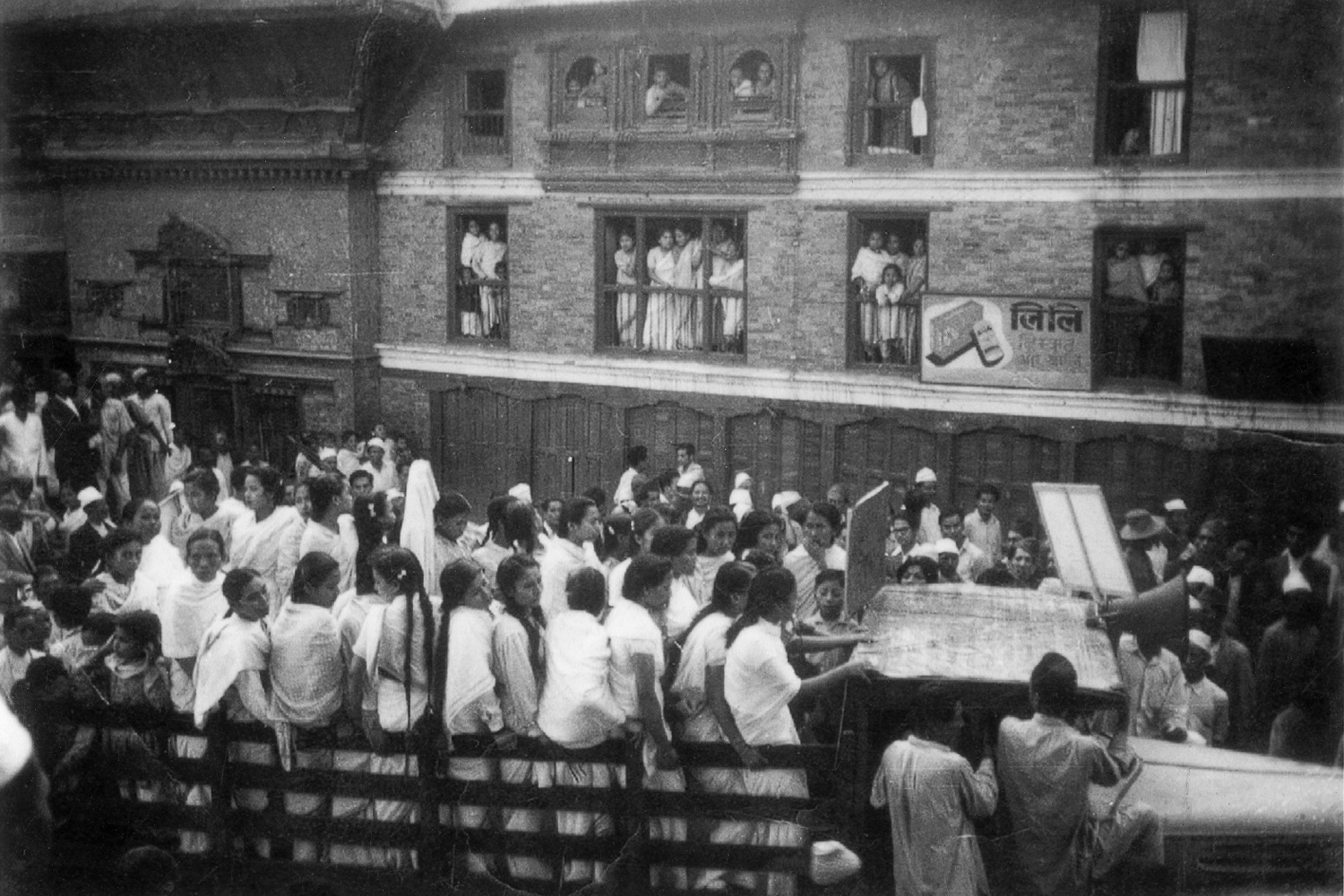
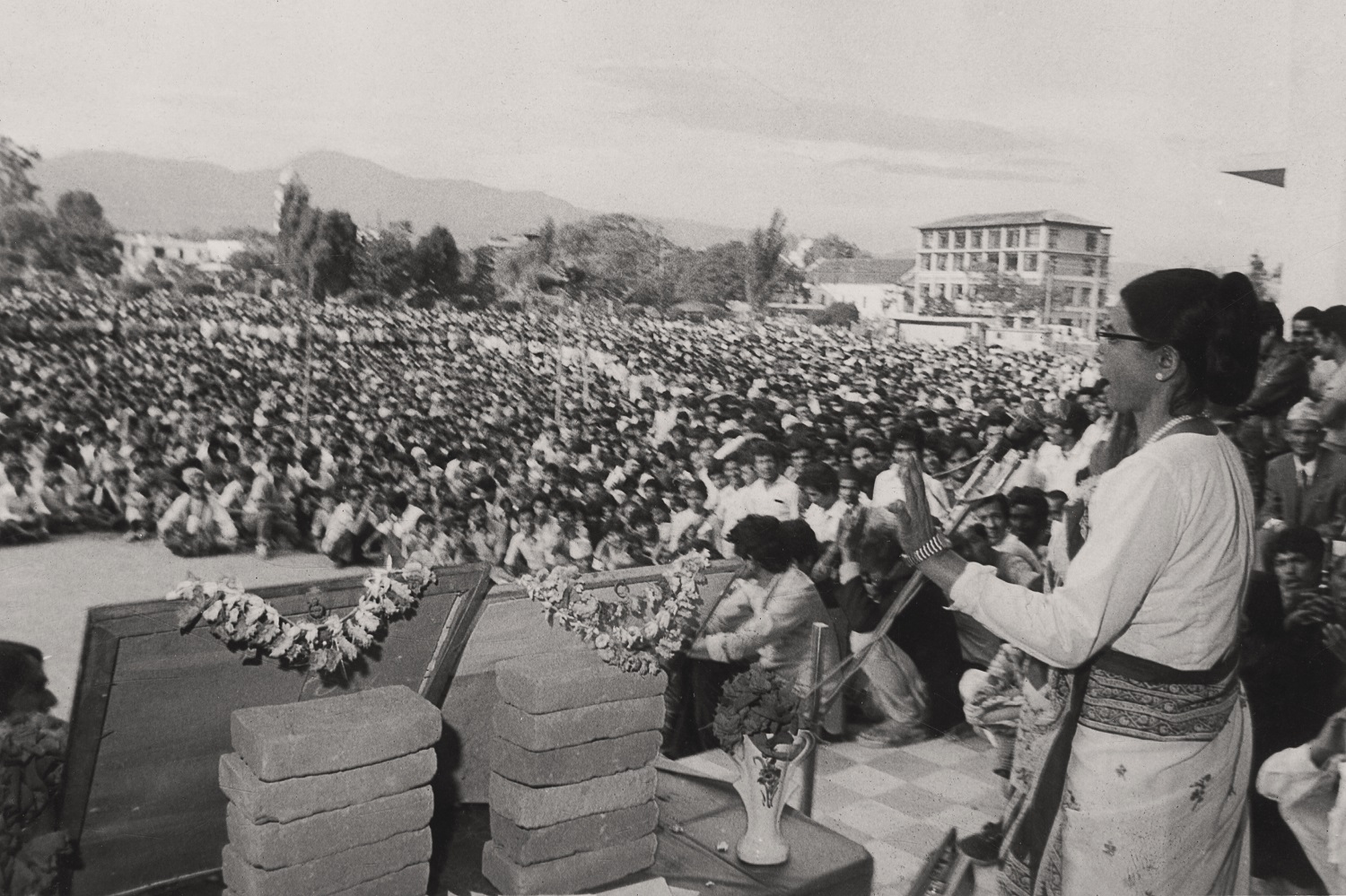
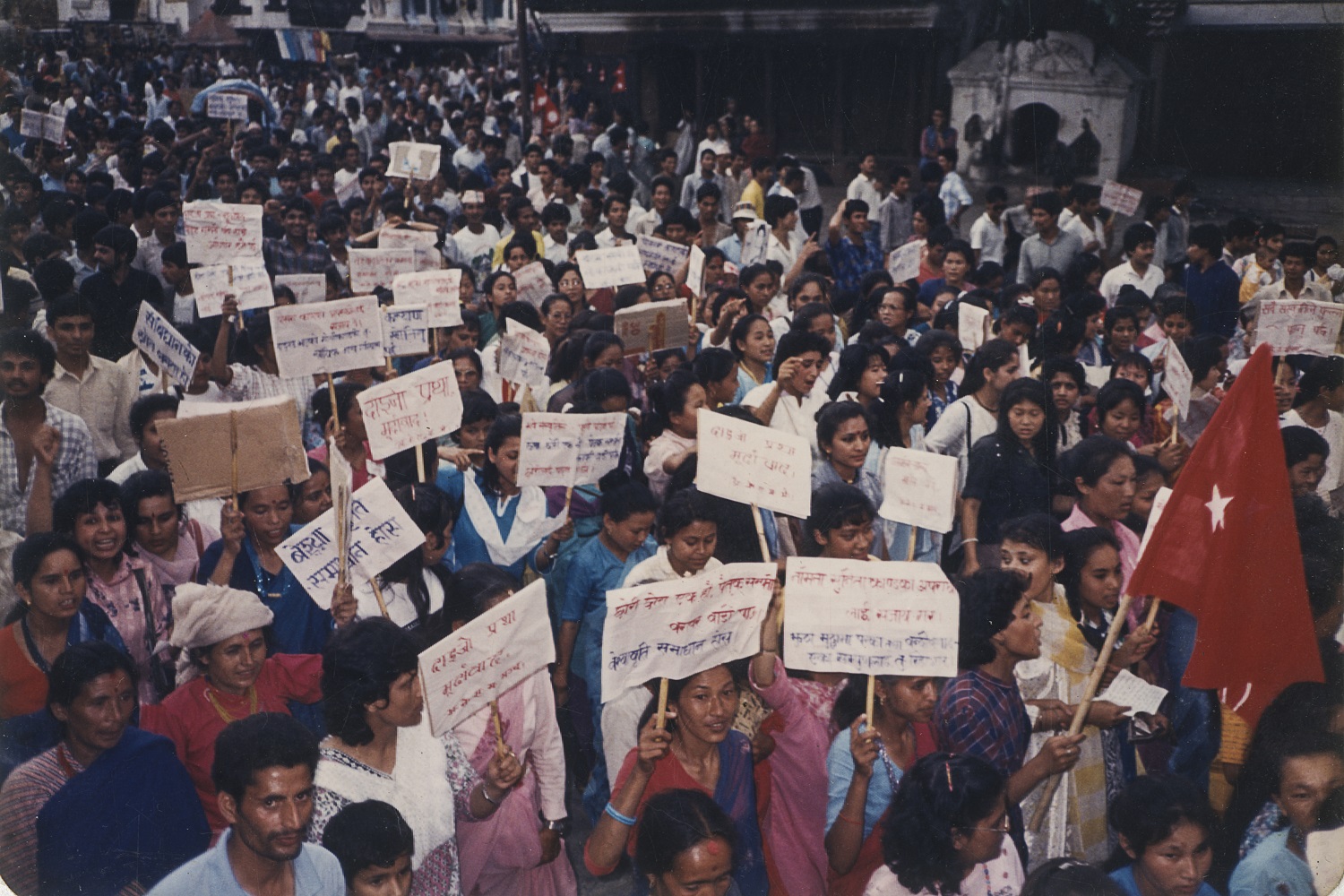
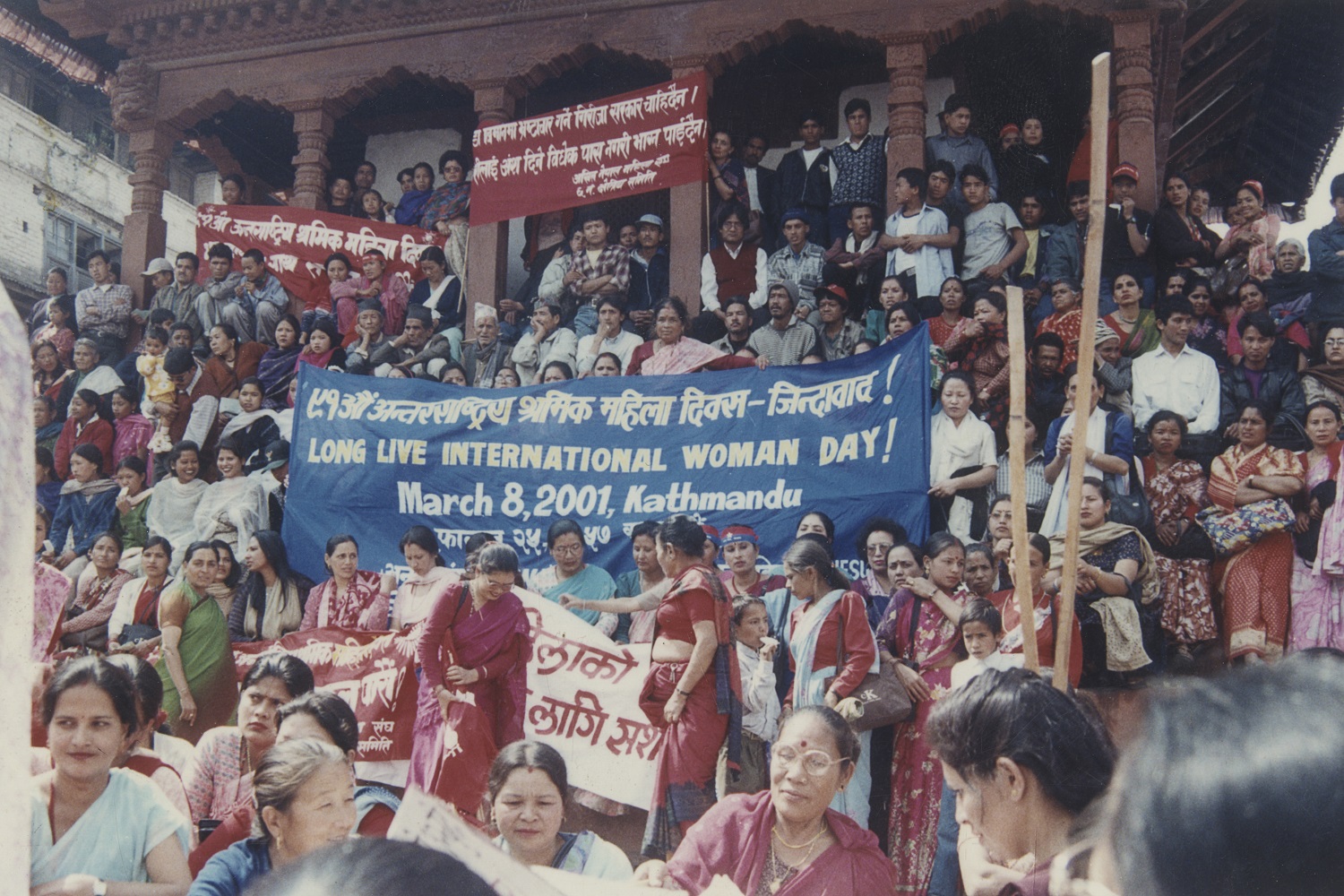
These images are part of Feminist Memory Project, currently under exhibition as part of Photo Kathmandu, is curated by Diwas Raja Kc & NayanTara Gurung Kakshapati. For more information about the exhibition, and Photo Kathmandu 2018, please visit the festival website.
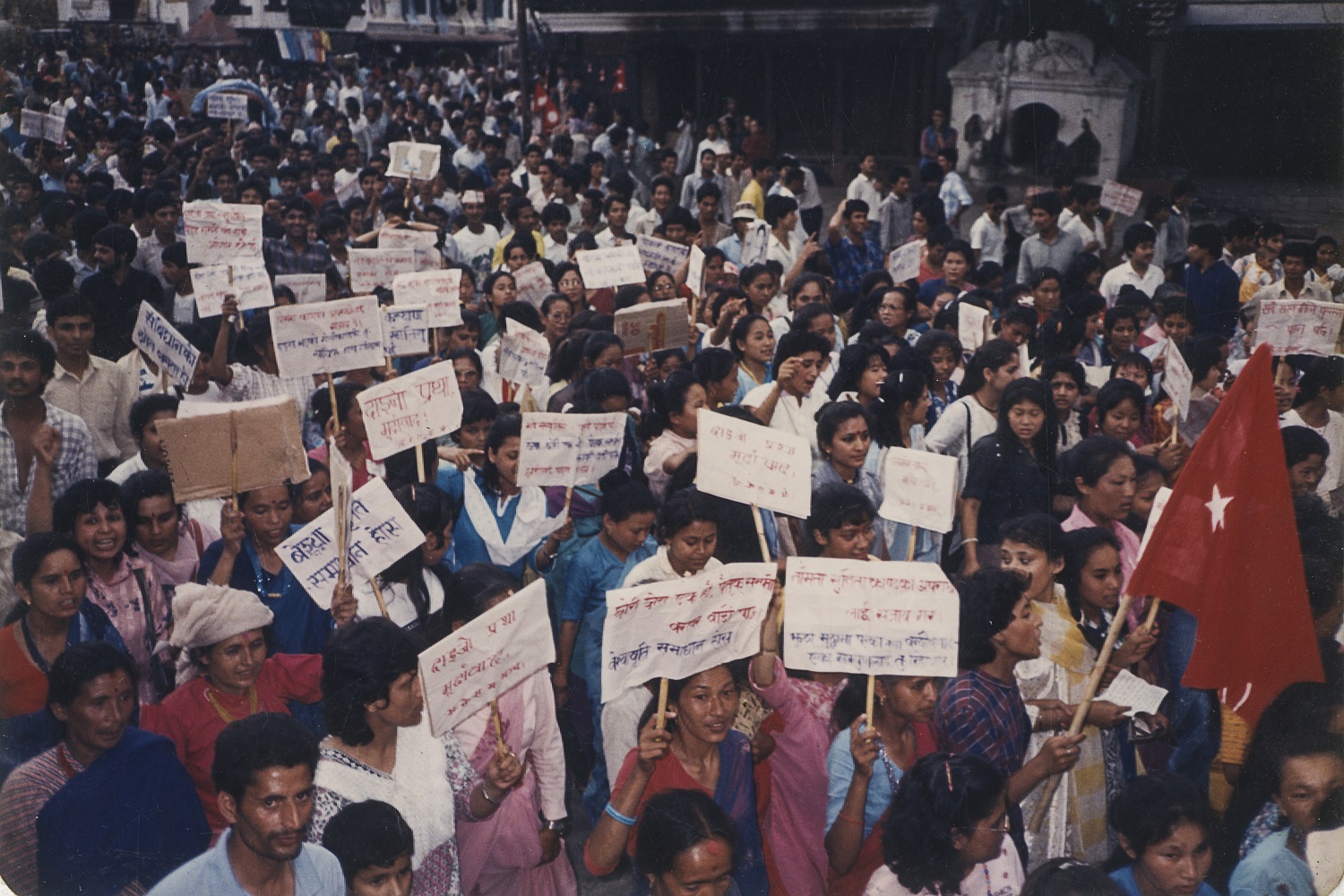
[Feature image: Kathmandu | 1981, Women from all walks of life gather for a mass meeting in Kathmandu to submit a letter of protest to the government following the rape and murder of sisters Namita and Sunita Bhandari in Pokhara that rocked the country. Hisila Yami Collection/ Nepal Picture Library]
:::
We welcome your comments. Please write to us at letters@recordnepal.com.

Nepal Picture Library Nepal Picture Library is a digital photo archive run by photo.circle that strives to create a broad and inclusive visual archive of Nepali social and cultural history, and has collected over 70,000 photos from various sources across Nepal.


Podcast
History Series
1 min read
A young king’s passions swerves Nepal into precarious circumstances

Features
12 min read
The gross underrepresentation of women in Nepal’s social science textbooks promotes a lopsided evaluation of Nepali history and society.

Features
Longreads
History Series
25 min read
Part 1: Recruiting haggles, Chandra, the game-changer, and getting a “K” for Bhim

The Wire
Features
Longreads
12 min read
Memorialization and politics in Germany seventy-two years after the Second World War.

Features
7 min read
By opening up traditional art forms to women and other castes, young musicians are making certain musical heritage like the dapha, believed to be the oldest form of bhajan in Nepal, will live on.

Features
Longreads
32 min read
Is maintaining the Kodari crossing between Nepal and China as an international highway a lost cause?

History Series
Podcast
2 min read
Will the Gorkhali Army succeed against the great empire?